Showing posts with label community. Show all posts

Wednesday, 27 May 2015

Know your neighbour

Best not to cut yourself off from neighbours
Last week it was time to put letters through the doors to invite everyone to our community group. It's a job I quite like doing, and one which our kids are always happy to volunteer for.  We were also delivering a first letter inviting residents to take part in 'Playing out' on two late summer afternoons.

Playing out is where we close the road for traffic for neighbours to meet up and play.  Wheelers lane is particularly lucky in that it has a stretch of green between the road and the houses which, when the service road is closed, is big enough for a game of football.  Local residents who have been there a while say kids used to play regularly on it, but since I've been living round the corner (15 years) it's mainly used as a car park, or sometimes a cut through for cars desperate to avoid traffic.

Last year we ran Playing out on national play day, 7th August  2014.  Having started our own community group earlier on that year, I thought I knew a lot of our neighbours, but I met many more, and a bit of luck with the weather gave me and my children a good chance to chat and play in the sun.

This year we're running it again, this time after school so we can invite Swanshurst school as well.  Birmingham City Council have once again waived the fee to close the road, Amey are willing to provide road blockades as and when required for free too, and Highways will give permission following assurance we will behave responsibly.

Both Swan Corner community group and 'playing out' work on different principles to gated communities, which assume keeping people away from where you live is safer:

A community group, and playing out, invites people in to where we live to make it a safer, better place.  By opening conversations and play, we hope to build trust between neighbours.  For example in our area litter, vandalism and agressive behaviour  are problems.  We've organised litter picking, planted trees and worked with residents, local groups and Swanshurst school on arts projects including making our fabulous Swan sculpture.

We're run by residents, not the council or a private business. Where there has been an opportunity to collaborate with others, like Swanshurst School, we've taken it - one of our 'playing out' sessions will also be with Moseley and Kings Heath woodcraft folk.

It's still all very new to us, and feels like an experiment.  From the start of Swan Corner Community Group many people have given good reasons to doubt it'll work. Who knows? Maybe they're right, but whatever happens, I know  we've done the right thing trying.

Useful links:

http://www.khcse.org/whos-coming-out-to-play/

http://www.khcse.org/playing-out-on-national-playday/

http://birminghamlives.blogspot.com/2014/09/looking-after-your-own.html

http://www.independent.co.uk/news/uk/home-news/gated-communities-and-segregated-schools-6bn-cost-of-poor-social-integration-9805025.html

http://www.independent.co.uk/property/house-and-home/rise-in-gated-communities-could-pose-a-threat-to-public-services-581318.html

http://www.telegraph.co.uk/news/worldnews/europe/france/10206682/Fortress-Britain-No-weve-had-dozens-of-invasions.html

Wednesday, 18 February 2015

Timebanks - people matter


At the end of 2014 we saw the launch of Kings Heath Timebank
'Kings Heath Timebank is a skills and time-sharing co-operative set up and run by people who live and work in the Kings Heath area of Birmingham, England. We use time as a currency – so that people can get things done without money.'
A fabulous alternative means of sharing your skills and expertise locally, which could really benefit indiviuals, smaller businesses, everyone, and it doesn't have to cost a penny.

There are, of course, financial reasons to be involved, but there are also social ones, opportunites for 'co-production', and a wonderful means of building a real, co-dependant local community, with all the rather harder to measure, but easy to see, benefits.

It is one of a number of measures recommended by NEF - The New Economic Foundation  :
'The UK's leading think tank promoting social, economic and environmental justice. Our purpose is to bring about a Great Transition – to transform the economy so that it works for people and the planet.'
NEF are politically independent, and have conducted long term and sustained research, making both accurate economic predictions and suggesting measures we can take (both as individuals and collectively) to really transform our economy.

The Time bank is just one of them, and well worth investigating!

Here's my local:

https://www.facebook.com/KingsHeathTimebank


Thursday, 16 January 2014

Swan Corner Community Group

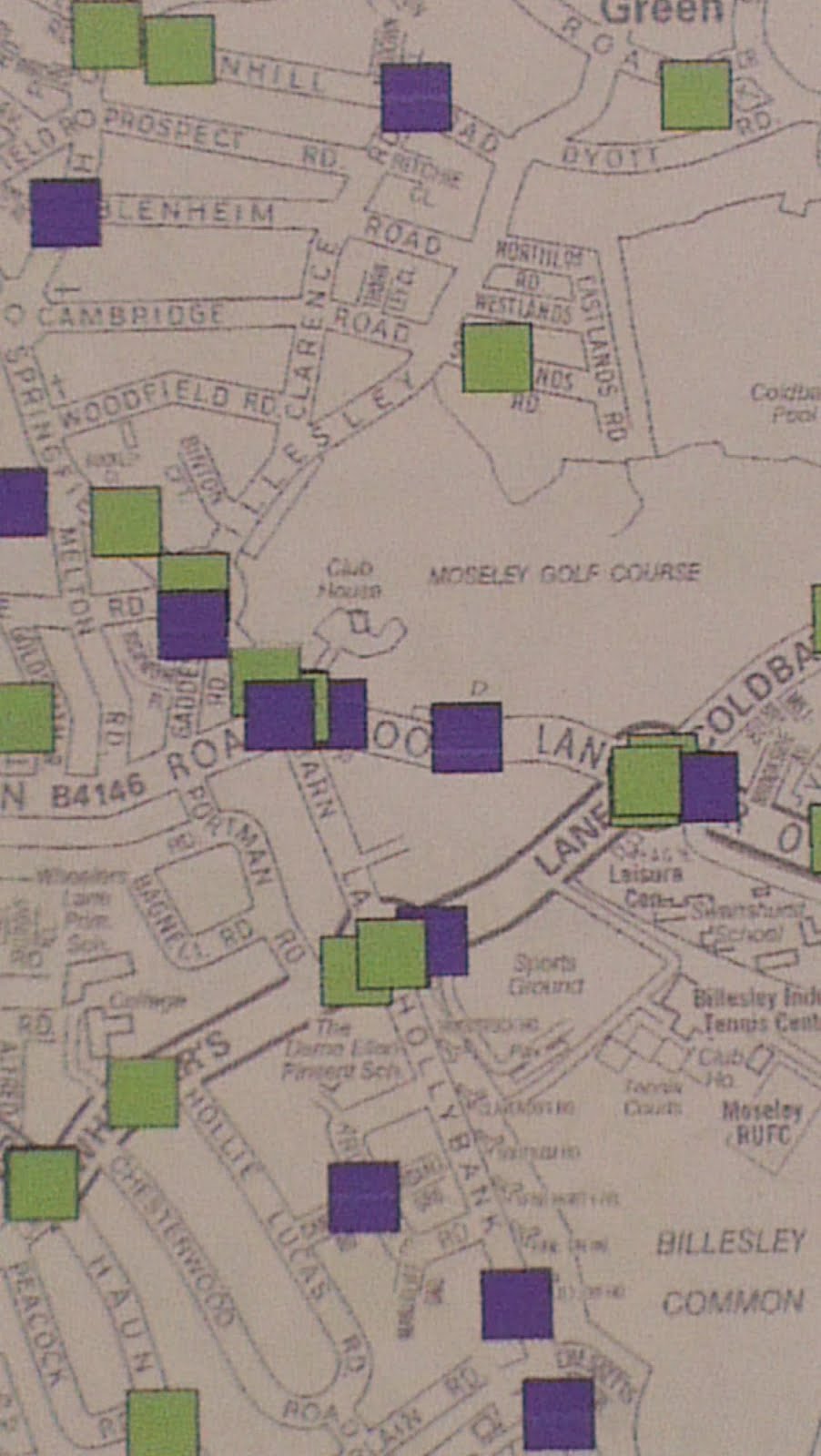
BCC Location of road injuries, 2010-2012.
Jago, my son, is the purple blob in the
middle of Brook Lane 
On Tuesday 28th Jan 2014, 7:30 to 9:30 Swan Corner Community Group will meet/ drop-in for the first time.  It feels like a significant step for me - being more involved in caring for my immediate local area, and taking more responsibility with our neighbours.

As with all groups, it was a particular issue which brought it about - planned road improvements.  But as we began talking to each other more issues were raised, and the more the need for a community group grew:

  • Planned road improvements and immediate effect on roads leading to the roundabout
  • Waste ground around the pub, anti-social behaviour and community planting plans
  • Parking for parents of Swanshurst causes problems at pick up and drop down
  • Increase in burglaries locally
  • Road accidents along our roads and the citywide 20mph plans
  • Larger 'Long Park Corridor' project 
  • Sustrans project improving access for cyclists and pedestrians
  • More street play for our children

Locally I've helped set up community groups before - Kings Heath Community Centre Garden Club, KHCC Stay & Play, and Hall Green Arts Forum, all of which were exciting and challenging.  With all those groups it was primarily about having some fun, either with kids and/or creative stuff, with people who wanted similar things.  Is Swan Corner different?  Is there enough shared to bring us together, or will our different interests and huge agenda be too much?

Looking forward to Tuesday 28th!

Sunday, 24 February 2013

Sale, one listed walled garden

The Horticultural, conservation & Training unit at Leasowes Park has been closed since summer 2012, and not too surprised to see the 'For sale' sign going up.

If I had a spare few thousand, definitely something I'd be interested in - a maintained historic walled garden, in need of some renovation.

Plans to sell it faltered in 2007 when the college changed it's mind, and it's future has very much been under a cloud since.  It has been hoped the council might 'buy back' the garden from the college, but does the appearance of a 'for sale' sign signal the end of this possibility?

I'm particularly saddened given the historical significance of the park and the efforts of the active and able Friends of the Leasowes (contact @Leasowes_Park on Twitter)

The community around Leasowes and the suitability of the site itself is crying out for some kind of community venture.  Is there someone out there willing to take it on?

Below is video from a project I was involved in in 2009 with the Friends showing the garden, presented by a Stourbridge College group using the garden at the time:


Useful links:

http://www.halesowennews.co.uk/news/1436014.Two_buyers_after_listed_park_centre/

http://www.halesowennews.co.uk/news/blackcountry/2272778.Leasowes_saved_after_college_u_turn/

http://www.halesowennews.co.uk/news/blackcountry/9706088.College_to_hold_last_open_day_at_Leasowes_before_closure/

http://www.halesowennews.co.uk/news/9678956.Friends_group_asks_council_to_save_Halesowen_park_s_walled_garden/

http://www.halesowennews.co.uk/news/4395876.Friends_capture_park_memories/

Thursday, 22 March 2012

Childrens Lives Exhibition sneak preview

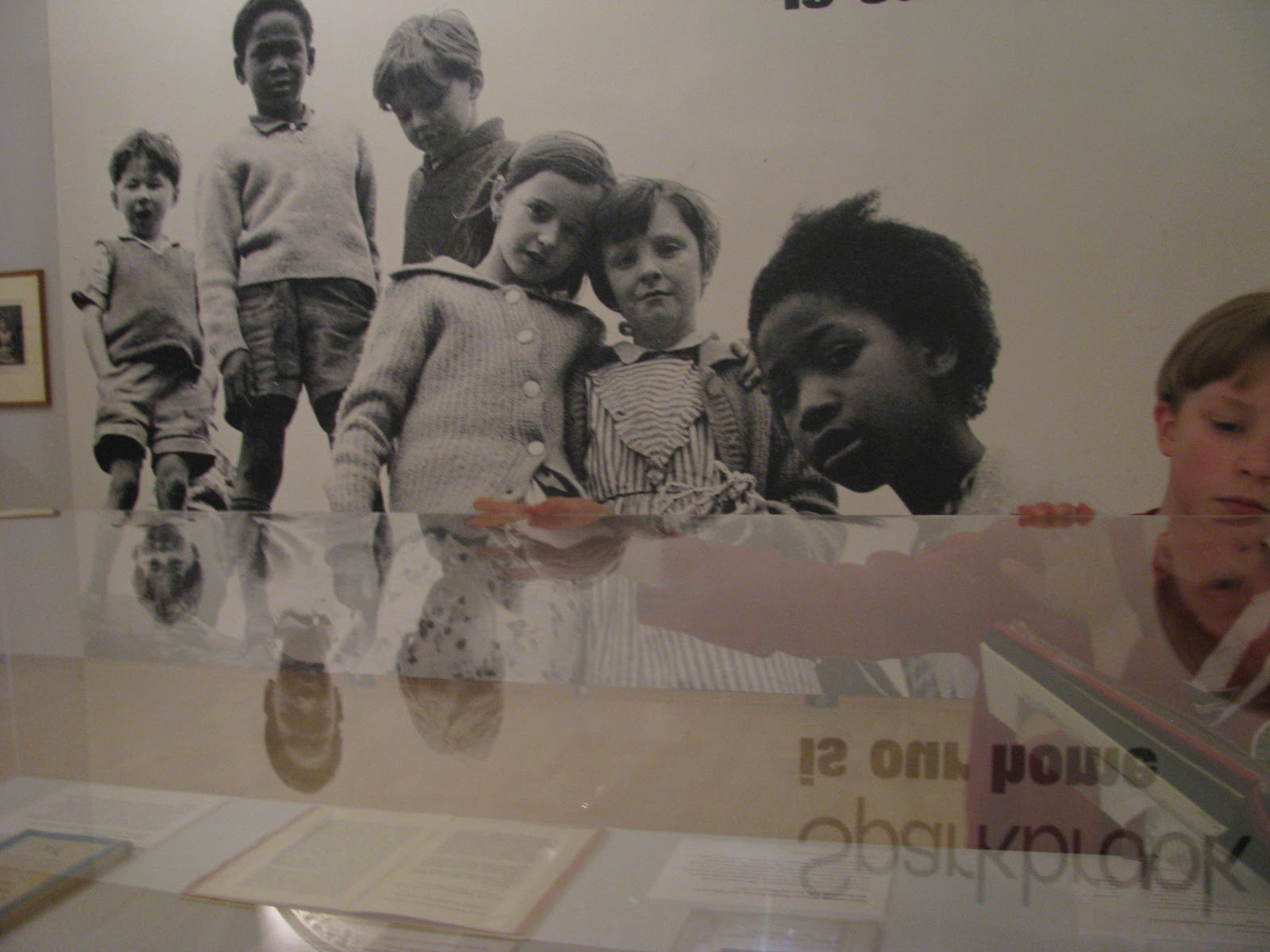
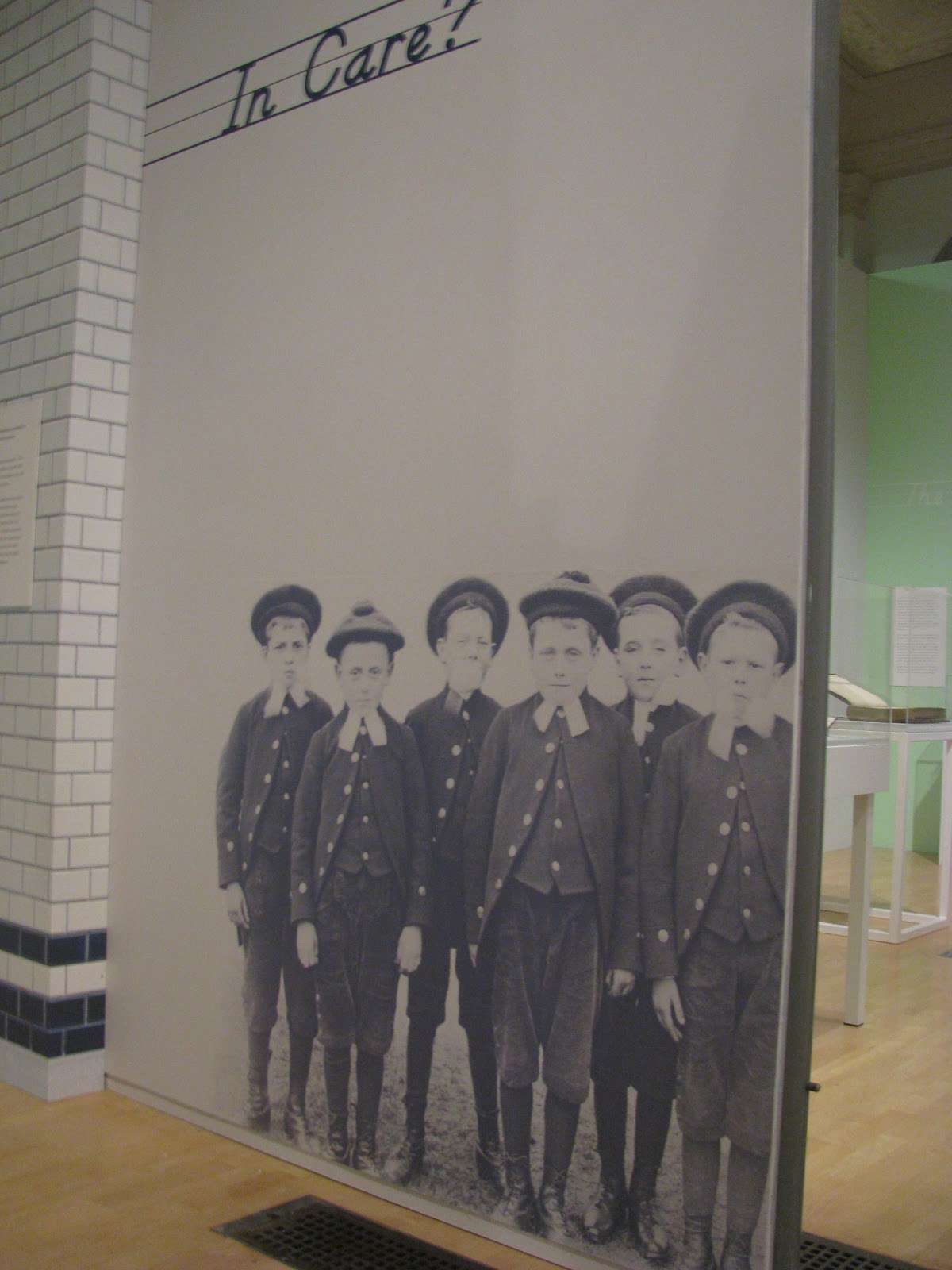
I was lucky to be invited to the launch of children's lives exhibition.  It was great to meet some of the young people who had been involved in the project seeing for the first time the finished exhibition.  It was fantastic to see their reaction as their ideas, concepts, material had been fashioned by the designers to form a significant portion of a major exhibition with their parents and other lucky guests.

It fitted perfectly with the rest of the archive material documenting children's lives.  Here are a few photos I took with Arthur:


Useful Links:


Thursday, 16 February 2012

Seeing a murmuration of starlings

Today I learnt a new word - murmuration, which I think is a large number of starlings.  Our good friend Emma, who regularly gives up her house in Cornwall to our brood, took us out to Rough Tor on Bodmin Moor.  We got a brief glimpse of the starlings on the drive there - this is what we saw:


The visual effect of thousands of birds flying overhead for so long, is stunning, as is the hum of their wings in the air.  What I thought was more surprising was the (imagined?) warmth from the trees and the amazing feeling of intimacy - you can't actually see the birds in the trees, but the noise makes you feel like your roosting up there with them.

How better to spend your valentines night experiencing a brief moment when you feel completely connected with a world far bigger than you can imagine - to see, hear, feel a community of thousands around you, chattering and singing, swooping and diving, making their home in a mile square of farmed forest.

I love the Valentines Day of cheesy cards, posh meals and hank panky, but it's not necessarily the same as that connection with people, with everything around you, even with birds.  That sense of awe and belonging, of community and love, on a small or big scale, is the real Valentines - it's there in front of me but mostly I don't see it. 

When we got back to Emma's house, Nikki pointed out the image on the stairs was not an unusual collection of biro marks on paper which I thought it had been, but a photo of a murmuration of starlings.  Thanks Emma.

Useful links:


Sunday, 5 February 2012

Thoughts on Herman the German

Recently we were given a (or is it the?) Herman the German Friendship cake mix from our friend Clare Chapman.  He's not much to look at - a bowl of bubbling gluey stuff, destined to a be a sourdough cake of some sort in a couple of weeks.

I wonder how German he is, and given my German ancestry, why I'd never come across him before.  The ancestry of this particular cake mix, apparently goes back to the 1970s - a bit worrying given the health and safety implications.

When you get a Herman, the first thing you do is wait a few days (do not put him in a fridge or he will die).  Then you feed him flour, sugar and milk, and leave him a while, wait a few days, then feed him some more.  At this point you divide him up into four and give away three of them to friends (there really is a bit of him that goes back a few decades).  He's a sort of 'pyramid' cake, where the intention is to make friends, not money.

As you can imagine, it's getting quite exciting now, as we think about who to give our mix to (anyone interested let us know!), and what type of Herman ours will become - at the moment apple is a strong contender, with outside chance of poppy seed.

It's the same kind of excitement I got when we had a turnip glut from our shared allotment in 1997, and I must have had a bit of time on my hands.  That was the year of the infamous turnip wine, and turnip cake.  We found a turnip cake recipe in a Guardian supplement years later, which I think justified the experiment - Wine and cake didn't taste bad, but left an unmistakeable turnipy after-taste.

Anyway, back to Herman.  First thoughts are, what a fantastic creative buzz, and yet, is there anything remotely creative about the cake?  You just follow instructions passed down to you.  Then I dug up David Gaunlett's definition of creativity:

'You have a world of people doing amazing, silly, clever, pointless, or heartfelt things, and putting them out in the world for others to experience, because they want to, and that seems to be more like what 'creativity' is meant to be all about.


Creativity is something that is felt, not something that needs expert verification.'

Herman might not be new or innovative, but he is to me.  He's made me feel part of something far bigger, and at the end of it, I'm passing that onto three very select friends, and a few more when we eat him.  Thanks Clare.

Useful links:

http://srroberts.hubpages.com/hub/German-Friendship-Cake-Herman

http://www.makingisconnecting.org/

Wednesday, 25 January 2012

Library burns, long live the Library


'The building was set fire to at night, and the building and contents were destroyed.  A book by Christabel Pankhurst was left at the site, along with a note reading, ‘To start your new library’.

It was not the first arson attack by the Birmingham branch of the Women’s Social and Political Union, which was active in the area throughout the period of its existence.

The burning of the library effected the poorest people in Northfield, including women and children, who had little access to reading.  The success in raising awareness of the suffragette cause came at a cost to sympathy for the movement.

It makes me uncomfortable to look at this image from nearly a century ago, and sad both for the women willing to risk everything for their cause, and for all people who suffered through their activism.

To me, it also demonstrates the (continuing) importance of libraries - their potent symbolic, and actual, link between power and knowledge.

Also the importance of photos (even an old black and white, low resolution copy of a newspaper) to tell a story.  Please visit Northfield Portrait and see our growing collection of photos, and send any images you may have of Northfield.

Please see:


Useful links:

http://www.connectinghistories.org.uk/Downloads%20(pdfs%20etc)/rtv-trails.pdf

http://www.parliament.uk/about/living-heritage/transformingsociety/electionsvoting/womenvote/case-study-the-right-to-vote/

http://artsforumnorthfield.wordpress.com/northfield-portrait/

Saturday, 7 January 2012

Children in Birmingham's Libraries

Spring Hill Free Library, now Tescos/Library
Many of the libraries in Birmingham still have 'FREE LIBRARY' printed clearly over their entrance - reference to our proud tradition as part of the free library movement, dating back nearly two centuries now.  It must have been an exciting time, bringing reading and 'enlightenment' to the masses, who had not had access to reading on such a scale before.

Birmingham Library Service delivery plan 2010-2011 still begins boldly:

'A free comprehensive, universal enquiry service using hard copy, electronic, and on line resources, staff expertise and highly specialised (sometimes unique) resources.'

However, with the Council looking for value for money, and reduction in costs overall, the council will be looking closely at how library provision is provided, not least because of the spectacular building of a new Library of Birmingham.  Looking to statistics of library usage nationally, there has been a gradual reduction in the total number of people visiting libraries,the number of library staff, and libraries.  But a closer analysis reveals some more promising stats:
  • Children's participation remains buoyant
  • Children's issues remain high, fiction even growing by 10%
  • Visits to library websites show huge growth year on year 
See Taking a closer look at Library Statistics

Even in the Strategic design brief for Library of Birmingham in 2008, it was recognised:

'Birmingham in the 21st century is ambitious and dynamic, youthful and diverse. It is the economic powerhouse and regional capital of the West Midlands. Home to more than1 million citizens, it has the youngest age profile of any European city and by 2020 it will be the UK’s first predominantly black and minority ethnic city. The Library of Birmingham will symbolise Birmingham’s identity as a global city with a local heart.'
Kings Heath Library Reopens, earlier in 2011

Not surprising, given Mike Whitby's involvement and Brian Gamble's leadership and award winning expertise in marketing, that the new library should prioritise improving use of ICT and services for young people and children.  Birmingham Library Services also continues to support projects like Children's Lives - working to engage more people to explore our archives.

What is more questionable is how library services for children and young people will be delivered as a whole, across Birmingham. How will Community Libraries relate to services provided in the Library of Birmingham?  Anecdotally from my work in schools, most children in Birmingham have visited their local library, and very few have visited the Central Library.  Those that have gone to town, will almost certainly have regularly visited local libraries first.

Recent changes we have seen have not been promising - Early in 2011 Birmingham schools library service was closed.  BCC figures suggest staff costs represent over half the total cost for our library service, so not surprising it has been targeted for cuts.  We now have only one constituency library per constituency, with at least one qualified librarian.  The other libraries face even more severe staff cuts and significant reduced hours of opening - particularly pressing at weekend and after-school hours.  With the closure of many other community venues, like youth clubs (3 out of 4 in my local area), across our city, libraries are one of very few safe places there are for young people to meet, study and learn.

For school groups visiting libraries, if there are staff available to assist the visit, the school is likely to be charged for this service.  Reduced staff also means libraries will be under pressure to reduce family events and outreach, like visits to nurseries, playgroups, and stay and plays - a good first introduction to reading for many children.

These are significant barriers to children and young people accessing reading and libraries, particularly from poorer families who are less likely to have regular access to computers.  Charges are likely to continue creeping into our libraries and increase these barriers, as does a more centralised library service making it harder for people to walk to their own library.  It may be tempting to charge more, but how risky a strategy is it to move away from Free Library principles?  It may increase revenue, but at what cost to the people who most use and need our libraries?

Useful links:


Saturday, 31 December 2011

Ye Traditional Wassail


We've been planning a Wassail, and being a bit of an urban chic hippy folky, I only had a vague idea it involved cider, making a noise, and possibly bearded men with bells.  So I did a bit of googling:

1860 Wassail Bowl Scene Moonlight Children John Gilbert
For history, Wikipedia was helpful dating it back to the 'Middle Ages' from southern England, christian celebration on the twelth night (6th Jan).  Other sources hint at a more general Germanic source, and pre-christian tree worship on the other twelth night, of pre Gregorian Calandar 1752 - (17th Jan), e.g.  this one, and ones here and here).
Thanks to Mister David


Wassail is a contraction of the Middle English phrase waes hael meaning literally 'good health', and most articles I read also refer to the 'Wassail bowl', filled with a mulled cider.  There are recipes for wassail, and some folk go further in suggesting particular woods needed for the turned wassail bowl, peculiarly Lignum Vitae from South America(?), or maple.

The art, and the music of Wassail tells of two different traditions merging slowly into one - a blessing of a significant apple tree, and door-to-door christmas carol singing, begging a sup of cider from the master.  See lyrics of the two most popular carols (of which there are many):

1856 London Twlefth Night Wassail Bowl Children Dog Party
Also hear the wonderful Kate Rusby singing one of them, or try youtube for range of folkies and others singing.


The Wassail Song

...We are not daily beggars 
That beg from door to door
But we are neighbours children
Whom you have seen before
Love and joy come to you
And to you your Wassail too,
And God bless you and send you 
A happy new year...

Gloucestershire Wassail

Wassail, wassail all over the town
Our toast it is white and our ale it is brown
Our bowl it is made of the white maple tree
With the wassailing bowl, we'll drink to thee 


So here is to Cherry and to his right cheek 
Pray God send our master a good piece of beef 
And a good piece of beef that may we all see 
With the wassailing bowl, we'll drink to thee...


Wassail hasn't entirely been subsumed into any religions, and being an 'English' tradition it has few champions, apart from an unholy alliance of cider drinkers, morris dancers and carol singers.  It's got a clearer message than other new year 'traditions', like fox hunting, Jools Holland and heavy drinking, so  here's wishing you all  WASSAIL!

Useful links:


Friday, 16 December 2011

BMAG History Galleries ready to go!


Today as a CAP member, I was invited to an informal ceremony at BMAG, over a mince pie and coffee, to mark the handover of the Birmingham History Galleries from the building contractor.

The History Galleries are a major £9m capital project which will tell the story of Birmingham from earliest times to the present day.  The galleries are not due to open to the public until September 2012.  We had the opportunity to have a look around the new galleries before the exhibition fit-out starts and see the building in its 'natural' state. In addition to exposing and restoring the Edwardian historic fabric of the Grade II* listed structure, there are some nice modern touches including naturally lit arrival and orientation spaces and a spectacular oculus rooflight which descends through two floors of the building.


It's a fabulous space now, and really makes the most of the features.  Looking forward to seeing it filled with goodies!

CAP is the Community Action Panel - a group of local people from different backgrounds and cultures, including community workers, artists, teachers, parents and musicians. It is one of three advisory groups that have been adivising BMAG on the History Galleries - if you want to get involved, visit their site.


A crude 300 degrees view of the main entrance space - the main exhib spaces leads off here, along with toilets and other bits and bobs, all newly fitted and looking shiny new - with Richard Stratham, Interpretation and Audience Development Officer, BMAG

Thursday, 15 December 2011

Co-construction of Wikipedia


On Tuesday I had the opportunity to do some Wiki training and become a Wikipedia editor, thanks Emma Buckler of the soon to end MLA.  Arts Council England takes over museums and libraries responsibilities, while The National Archives 'assumes responsibility for providing strategic leadership to the archives sector and advising government on its development.'  A curious arrangement leading to more unanswered questions over the future of libraries and museums.  But that's for another blog.


There are, in fact, many thousands of wikis, but the English part of Wikipedia is what we were interested in.  Love it or hate it, it is the biggest, and most widely used encyclopedia in the world, with over 20 million articles and growing at an incredible rate. Andy Mabbett, our trainer, outlined just what makes Wikipedia:


  • is [only] an on-line encyclopedia
  • strives to be balanced and impartial
  • is free content
  • editors should be nice to each other
  • no firm rules
These are the five pillars of Wikipedia, although I'd argue #5 shouldn't really be there - maybe I can edit it out of Wikipedia?  As quickly as possible Andy moved us onto editing our own content - not an easy task as writing entries is a little clumsy, and knowledge of .html is helpful.

Once we started, I was surprised how stringent Wikipedia is.  I had thought to train primary children to enter their own entries about people they thought were important.  It might yet be possible, but may take longer as the pillars suggest entries need to be 'notable' - to be notable you should cite at least three 'reputable' sources, and ensure you are being 'impartial'.  It is frowned upon to reference to your own blogs or write about yourself or your own organisation.  You also need to have some understanding of copyright and permission to use photos and other material.  Plagarism, unsurprisingly, is a big no no.

What also became clear is just how many people are out there apparently spending large portions of their day prowling wikipedia, as both vandals and vigilantes.  There is even a 'random article' button you are encouraged to hit and check articles existing in Wiki, in any spare moment you have.

One trainee had not completed all her citations before saving to wiki.  Within five minutes the entry was being deleted by another editor somewhere in the ether, before it had even been completed.  Another trainee received a slapped wrist, again from a wikieditor out there, for too closely copying material from another source.  By the end of the day we also had a case of 'Geohacking' happen and resolved by another wikieditor: The googlemaps link to a nearby heritage site was sending the Wiki user to a webpage about a strip joint in Birmingham.  

What I think is most surprising, and promising for the future, is how quickly volunteer editors picked up on all the above problems and corrected them - an indicator of the quality of entries and editors.  I can see why more serious academics are increasingly using wikis in a similar way to the more specialist journals which are increasingly on-line too.  Instead of peer review only, wikis open up your article for review and editing to a far greater number of people who will have many different specialisms and knowledge.  Wikipedia and the other associated wikis opens up serious academic articles to a far larger audience instantly, with free content openly available to develop ideas for the good of all.

My first entry was co-construction  of learning -  considering what wikipedia represents, a bit of a shocker no one had thought to put this one in.

Thursday, 8 December 2011

Missing the Chickens at Four Dwellings High

Feather-footed friend at Woodgate
On a beautiful sunny November afternoon, I was with my kids, admiring the feathered feet chickens, and avoiding the chinese geese at Woodgate Valley Urban Farm.  Looking out from the corner of the field, I think I saw the astroturf (or something light greeny) of Four Dwellings High.


Chickens are something you can't help hearing when you walk around Four Dwellings High.  They are there, strutting around in the central square - a living school farm in the middle of the school.  Strangely, when you spend a bit of time there, the noise isn't disturbing.  It's actually quite comforting, and in keeping with the relaxed, warm, friendly atmosphere you'll find there.  As the Head, Bernie Smith, pointed out in 2002, the chickens do represent something of the philosophy at the school:


'to get chickens laying, you have to get the conditions right. Even then it will be some time before they start to produce eggs.'


Looking to pioneering work nurturing young minds, encouraging engagement and participation with important issues of today, FDH keeps popping up.  I was at an event looking to the future of green schools at Thinktank - Four Dwelling students were there.  The chickens weren't, but were much talked about.  I was talking to a teacher from a girls school recently about Birmingham suffregettes - FDH have done it already:


Children’s Lives, which will be the first major project in Birmingham and the West Midlands to consider children’s lived experiences from the 18th century to the present day, again FDH are there.  It was one of a handful of UK schools identified in a report written by University of Birmingham:


'As part of the Carnegie Young People Initiative and the Esmée Fairbairn Foundation programme of work on pupil participation, we were asked to identify case study schools in different contexts in England, which demonstrate good practice.'


So all this nurturing of young minds, is it working? Well, they recently beat Camp Hill to become Midlands champions in a national competition to inspire business leaders and entrepreneurs of the future last month - The National Final will be held at Wembley Stadium on January 25th 2012.  FDH also boasted two England shirts for the 1-0 victory against Sweden last month.


There are individual successes, but what is more impressive is the development of a community feel throughout the school, despite the distance many students live from each other, and 'many of the areas from which the school draws its pupils are deprived' (OFSTED).


I'm writing this blog because that feeling of 'family' - mutual support and empathy - includes staff and even visitors like me.


'Eternal Light' near Tommy Knocker's Tree
I first worked there in 2005 to support Graham Langley, working on 'Who are we?' - a project where we created a story (and a scrap model) from the wonderful local place names and performed to Four Dwellings Primary Yr6 as part of transition to the High school.


Since then I've worked on a range of projects as part of Creative Partnerships, with Birmingham Library Service and Birmingham Archives and Heritage, with various year groups, departments, staff and creative practitioners, all fantastic fun, and always reflecting the school’s philosophy to ‘make life better for all', listening and enabling students to make decisions, take action for themselves.

I agree with Bernie Smith and 'urge you to come and find out why it is so special', if only to sit and listen to chickens laying eggs.


Other projects:


The Goo!
Working with Science Embassadors (yrs 7 to 9) to make a short science fiction film and launch a school-wide 'science invasion' day.


Chocolate and Slavery

Film re-creation of a court case one hundred years ago in which William Cadbury sued the London Standard for libel, having been accused of using slave labour in his Sao Tome and Principe plantations.  Comparison with modern day slavery in chocolate industry and the positioning of media, the public and chocolate industry in light of continuing child labour, bonded labour and slavery.


Early Years Reflective Workshops


Sunday, 27 November 2011

Community Health in my brave new world

Volunteers recieving award from Coop
Yesterday I took a couple of trees worth of willow along to the Heart of England NHS annual community health fair.  John Boyle from Midlands Coop had asked me to come - see Fairtrade Blog for more photos. 

I got lucky - on arriving a handful of volunteers from Joseph Chamberlain College helped me get set up, trial my activity, and spent the rest of the day wearing willow crowns and waving wands all around the event.  Someone from 'Heart of England NHS foundation asked if I could make a willow heart (why didn't I think of that?).  I gave it a go and before long, decorated heart wands were as popular as the stars.

Exchanging a 'wish for a wand' generated a tree worth of comments which reflected conversations we had making and decorating our wands.  The free chocolate, interestingly was turned down by many (on health and diet grounds?).  The event was really fun - great atmosphere, and got to meet loads of interesting and different folk.

It's glass half full, I know, but being cut off from my main source of revenue, training, networking, everything (creative partnerships) isn't all bad.  I probably wouldn't have got to go to this event, go to wikipedia workshop later next month, think more about what it is I want to do, sort out the garden, and generally work just as hard for half the money!  But today, I'm loving it.

Thursday, 3 November 2011

Are young people 'Angry, Violent and Abusive'?

Barnardos research has rekindled the old 'young people are animals' debate again, which hadn't really died down since the riots, and draconian sentences of a month ago or so, and before that, the rolling press coverage of various 'hoodie' related and other generally lazy 'children-are-not-what-they-used-to-be' stories.

In their survey they found that Almost half of Britons think young people are angry violent and abusive, with one in four thinking troubled children are beyond help by the age of 10. there was plenty of other equally scary stats (see Children behaving like animals, Barnardo's survey finds).


So which two thousand people did they ask?  Were any of them under 18?  Constant debate among (only) adults about changes in childhood is really rather dull and a bit meaningless.  It does however, reveal a far more interesting and useful question:

How much (and what quality of) social contact is there between younger and older people?

Going back to the figures, I'd really like to ask the 24% of people who thought those who behaved badly were beyond help by the age of 10.  How many of them have any meaningful relationship with any children?  I find it hard to believe anyone who lives or works with children (angels or bad boys) can possibly imagine any child being beyond help.

Looking to our politicians, have any come from troubled childhoods?  Boris Johnson, Dave Cameron and their Bullingdon Club mates have certainly done quite well despite, in their youth, trashing pubs and restaurants.  Even Cleggy, given his previous arson conviction, has done quite well.

Dave Cameron in his now famous 'hug a hoodie' speach, to the Centre for Social Justice founded by Iain Duncan Smith (not many under 18s there) says:

The first thing is to recognise that we'll never get the answers right unless we understand what's gone wrong...We - the people in suits - often see hoodies as aggressive, the uniform of a rebel army of young gangsters...

The complaints are identical.
Young people are out of control.
There's nothing for them to do.
Why can't their parents do their job properly?

...And if the phrase "social justice" is to be meaningful, it has to be about justice, as well as compassion and kindness.  It has to involve a sense of cause and consequence - of just rewards and just deserts.  One of the most important things we can teach our children is a sense of justice.'


The 'suits' is an interesting stereotype of his audience (their website certainly doesn't suggest that); The 'hoodies' in his speach remain a voiceless stereotype. When he talks of 'justice' all I can see screaming out is the injustice meted out everyday on young people by adults. ASBOs, mosquito alarms, and the recent use of heavy custodial sentences in the riots are obvious recent injustices, but they also model division between young and old, exasperating entrenched attitudes of young and old.

David Cameron goes on:

'Too often, the reality is that for "partnership" you can read "takeover."
If we're serious about the social sector doing more, then government and the public sector has to learn to let go.

There are two values at the heart of modern Conservatism.
Trusting people, and sharing responsibility.'


He was, of course, considering 'state' and 'private' sectors. However, if we make the leap to consider children themselves as part of a 'partnership', a trusting relationship, sharing responsibility, then we can look to real 'justice', and an opportunity for all of us to work together to challenge criminal behaviour and promote 'Big society' values.

Some examples of on-going collaborative work with young people in Birmingham:


 The Future Melting Pot  empower young people to achieve their potential through enterprise

Children's Lives -  Birmingham's Young People's Archive

No Postcode - Young people from the West Midlands has made a video to stop people joining gangs

Please add more you know about in comments.


Other links