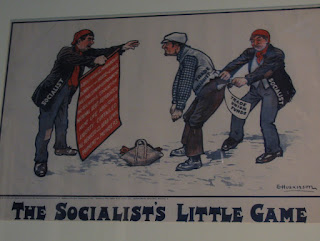
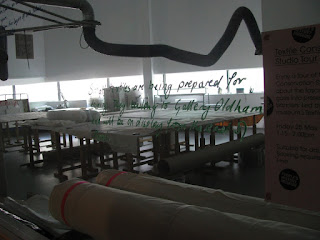
It's Nikki's birthday weekend, we've been meaning to go for a while, so packed the kids into the car and set off as early as we could ( a little after 11). Two hours later, we're nearly there - only Trafford to go past. Shame we didn't factor in Man U vs. West Brom, but fairly soon we were there. Arthur thought it seemed like a long way to go to a cafe, Jago thought we were going on a march, but no one was disappointed when we got in (not even by the packed lunch from leftover party bits):
I got lucky - on arriving a handful of volunteers from Joseph Chamberlain College helped me get set up, trial my activity, and spent the rest of the day wearing willow crowns and waving wands all around the event. Someone from 'Heart of England NHS foundation asked if I could make a willow heart (why didn't I think of that?). I gave it a go and before long, decorated heart wands were as popular as the stars.
Exchanging a 'wish for a wand' generated a tree worth of comments which reflected conversations we had making and decorating our wands. The free chocolate, interestingly was turned down by many (on health and diet grounds?). The event was really fun - great atmosphere, and got to meet loads of interesting and different folk.
It's glass half full, I know, but being cut off from my main source of revenue, training, networking, everything (creative partnerships) isn't all bad. I probably wouldn't have got to go to this event, go to wikipedia workshop later next month, think more about what it is I want to do, sort out the garden, and generally work just as hard for half the money! But today, I'm loving it.
Today I went to MAC for Co-operatives West Midlands networking event for 'creative cooperatives'. Nick Matthews introduced the day, highlighting the continuing problem the coop has in promoting itself, with classic response, 'the Coop, is that like Tescos?'
No it isn't, and interestingly enough, despite a more troubling UK retail Coop, Cooperatives in Japan are apparently out competing Tescos. Nick talked about organising creatives as like 'herding cats'. He suggested the coop model works for creative types. I'd agree they have a talent for working with a wide range of people, as was evident with the next presentation from Electro-swing Circus - Birmingham's newest Performance Co-operative.
There was discussion about the 'resilience' of cooperative structure in present eco climate - afterall, advantages of a workforce which owns the business works harder, and people buy the 'coop' brand believing it to be more 'ethical' (even if, returning to coop promotion problem, few people seem to know why coops might be better).
There was also mention of potential economic advantages in regard to taxing. Steve Holdworth from IGNITE creative discussed why they became a Coop, initiated by advice from their accountant.
Maybe I should be more bothered by the hard financial advantages of coops, but I went to the event because I wanted to explore the social benefits of sharing embodied in the Coop. What advantages are there? Well, Co-operative Futures were on hand, highlighting the 'family coop', and used a Bus analogy - a coop is like a bus taking people to profits/benefits. A key question - Who do you want on the bus and why? Who claims the dividend and who are your customers? Does your model really work? Hard questions, and subtly different from other business model questions.
Recently I've been thinking more about 'the funding bus' - a phenomena which is growing in our (creative and education) sector, where practitioners increasingly look to the funders first, and find a client to match. The model is embodied by playground equipment manufacturers like Playforce, who provide support for schools to make applications to funding sources they have already identified, to buy the equipment they sell. It's a tough challenge , when some applications require a great deal of knowledge, time and effort to complete, and where experienced form fillers are at a distinct advantage. Surely this is a valuable skill we should be rewarding - if some of the funding targeted at schools goes to pay for fund raisers, isn't that OK, as long as they get some cash for the school? Operating in a competitive market, some businesses may not be offering schools the best value - isn't that up to the schools to work out?
I was there because I thought the cooperative model may offer some solutions to these problems, sharing info, experiences, practice, to provide the 'best quality' creative work efficiently. I was also pleased to see Future Melting Pot there, already on the way to being a cooperative - collective experience across a range of sectors to support and promote each other.
Coops don't necessarily avoid the funding bus, but they can provide social benefit and business solutions which ensure needs are more properly analysed, and more of the money is spent most effectively. Coops seem to win hands down, financially, providing quality services, treating workers properly, generally more ethical, and yes, Coops, are sexy again.