 |
| Enjoying the 20mph sign quiz - Where's that sign? |
Showing posts with label Birmingham. Show all posts
Showing posts with label Birmingham. Show all posts
Sunday, 3 July 2016
20mph at Queensbridge School


Tuesday, 15 March 2016
Curating diversity
 |
| Another deposit for Paganel Archives |
The best thing, though, in that museum was that everything always stayed right where it was...Nobody'd be different. The only thing that would be different would be you. The Catcher in the RyeHow can museums attract diverse audiences and what, if anything, can schools learn from the experience of museums?
Tuesday, 9 February 2016
Dead cat in the classroom
 |
| A Rode dead cat |
"The key point, says my Australian friend, is that everyone will shout 'Jeez, mate, there’s a dead cat on the table!'; in other words they will be talking about the dead cat, the thing you want them to talk about, and they will not be talking about the issue that has been causing you so much grief." (Boris Johnson talking about his friend Lynton Crosby)So is there a similar phenomena in the classroom? It'd be nice to think there is, if only to make good use of a currently popular simile.
In Birmingham we have our 'dead horse' or 'trojan hoax' - although some insist the original letter was not a hoax, following four separate enquiries into 21 schools no evidence that anyone caught up in the 'Trojan horse row' has acted illegally. In fact, there's not much evidence of anything. The Kerslake report instigated following 'Operation Trojan Horse' led ultimately to Sir Albert Bore, Council leader, forced to resign and the Council itself under threat of being broken up.
But that's in education, or politics, and not in the classroom. Here's my 'dead cat':
'An attempt by a student to distract the teacher by encouraging the teacher to talk at length on a different topic.'
When I was at school, there was a period of time when this was something of an artform. First you needed to know your teacher's weakspots - a penchant for rock climbing, or baroque music. And then you had to use an opportunity to ask a question to introduce the subject, flatter the teacher and encourage them to talk. It's only since then I realise the teachers were probably complicit in the 'dead cat strategy' I hope dead cats (and not horses) are still being thrown at teachers.
Saturday, 9 January 2016
Lollipop to be axed in Birmingham?
 |
Protest for more crossings in Birmingham 1973
Thanks to the Warwickshire Photographic Collection
Birmingham Archives & Heritage: WK/B11/5199 (110/2415) |
Tuesday, 29 December 2015
Desperately seeking devolution
 |
| What does devolution mean? From B'ham Budget consultation |
Tuesday, 6 October 2015
The Localisation agenda
 |
| Mark Thomas, thanks Who's laughing now |
Monday, 14 September 2015
Cornwall lights Birmingham hearts
 |
| Among the missing - Scene in a Cornish Fishing Village 1884 Walter Langley |
Saturday, 15 August 2015
Follow the signs


Monday, 10 August 2015
Play on our mean streets
 |
| Escalator to the gym |
Wednesday, 27 May 2015
Know your neighbour
 |
| Best not to cut yourself off from neighbours |
Playing out is where we close the road for traffic for neighbours to meet up and play. Wheelers lane is particularly lucky in that it has a stretch of green between the road and the houses which, when the service road is closed, is big enough for a game of football. Local residents who have been there a while say kids used to play regularly on it, but since I've been living round the corner (15 years) it's mainly used as a car park, or sometimes a cut through for cars desperate to avoid traffic.
Last year we ran Playing out on national play day, 7th August 2014. Having started our own community group earlier on that year, I thought I knew a lot of our neighbours, but I met many more, and a bit of luck with the weather gave me and my children a good chance to chat and play in the sun.
This year we're running it again, this time after school so we can invite Swanshurst school as well. Birmingham City Council have once again waived the fee to close the road, Amey are willing to provide road blockades as and when required for free too, and Highways will give permission following assurance we will behave responsibly.
Both Swan Corner community group and 'playing out' work on different principles to gated communities, which assume keeping people away from where you live is safer:
A community group, and playing out, invites people in to where we live to make it a safer, better place. By opening conversations and play, we hope to build trust between neighbours. For example in our area litter, vandalism and agressive behaviour are problems. We've organised litter picking, planted trees and worked with residents, local groups and Swanshurst school on arts projects including making our fabulous Swan sculpture.
We're run by residents, not the council or a private business. Where there has been an opportunity to collaborate with others, like Swanshurst School, we've taken it - one of our 'playing out' sessions will also be with Moseley and Kings Heath woodcraft folk.
It's still all very new to us, and feels like an experiment. From the start of Swan Corner Community Group many people have given good reasons to doubt it'll work. Who knows? Maybe they're right, but whatever happens, I know we've done the right thing trying.
Useful links:
http://www.khcse.org/whos-coming-out-to-play/
http://www.khcse.org/playing-out-on-national-playday/
http://birminghamlives.blogspot.com/2014/09/looking-after-your-own.html
http://www.independent.co.uk/news/uk/home-news/gated-communities-and-segregated-schools-6bn-cost-of-poor-social-integration-9805025.html
http://www.independent.co.uk/property/house-and-home/rise-in-gated-communities-could-pose-a-threat-to-public-services-581318.html
http://www.telegraph.co.uk/news/worldnews/europe/france/10206682/Fortress-Britain-No-weve-had-dozens-of-invasions.html
Monday, 23 March 2015
Backs to the future
It was, of course, resisted by the Conservatives. There were concerns that the act 'enforced' taxes for Libraries on everyone, that they might compete against private interests, they might 'become sites of social agitation', and that there was no need for libraries anyway, seeing as no one really read, except the educated rich. The arguments for - Public libraries would provide facilities for self-improvement through books and reading for all classes, not just those who were wealthy (see wikipedia).
So what's changed? In terms of the arguments (and who is on which side) very little. In terms of civic Birmingham's place in those arguments? That's a little harder to place. While the new Library of Birmingham was the only completely free site to make the top ten visitor attraction sites in the UK last year (2.5 million visitors), and the only one outside London, cuts will see the library staffing cut in half, as will the opening hours.
And what about the alternatives to Council-run libraries? Can partnerships be the answer? Well so far it's not been a very successful experiment:
"...in Bristol two floors of the Central Library are being taken over by a Free School. The concerns there are over loss of storage/office space for the library, a suspicion that the Free School has been given too good a deal and some doubt over the ideological motivations of the relevant councillors in the move. The second is the taking up of considerable space in Cambridge Central Library by a private company for business offices. This has similar themes – with extra concern over the commercialisation of the library and the speed with which the decision was made." Public Library NewsIn Birmingham we had the Tescos / Spring Hill Library partnership from 2010. At first it appeared the partnership might help pay for renovation and renewal of the beautiful early Public Library, but even though it's imminent closure appeared to be delayed in March 2014, its future is far from certain. Partnership appears to be more a gradual diminishing of services and a movement to privatisation.
150 years on it still seems Libraries are fighting to argue their economic and social benefits, as over a century of community support, including libraries, seems to be undone in a couple of years.
Useful links:
Sunday, 15 March 2015
Playing makes economic sense

Back in Birmingham we ran a breakfast meeting to show our latest Parks for Play film and to discuss work with our Birmingham City Council partners to develop longer term strategies for funding. Parks4Play run Playwell - the only fully inclusive provider of after-school care in the UK. While provision for disabled children nationally is shockingly poor, it underlies a wider mis-understanding about the needs for specialist childcare and recognising its benefits.
Parents of disabled children want to work to provide for their families and not be dependent on the state. Playwell also provides vital social context for both the children and their families to learn, develop socially and, not least, to play. The families who have access to Playwell are the lucky ones. Across Birmingham and UK there are families with disabled children where parents want to work but can't. Their children, likewise are in poverty, dependent on the state and isolated with little or no play opportunities.
There are 84,000 children across Birmingham in poverty. How many of them are disabled? How many of them have parents able and willing to work but find themselves unable to work because they are caring full-time for their children?
After-school care like Playwell is part of the solution to high levels of poverty and effective support for families with disabled children. When will both the economic and welfare benefits of childcare like Playwell be recognized and best practice like this be spread across the UK?
Saturday, 21 February 2015
Celebrating Linguistic Diversity

'The United Nations' (UN) International Mother Language Day annually celebrates language diversity and variety worldwide on February 21. It also remembers events such as the killing of four students on February 21, 1952, because they campaigned to officially use their mother language, Bengali, in Bangladesh.'
Time and place
Birmingham has a long history of welcoming migrants, and indeed non-conformists running back to the 18th century and earlier. In the late 18th century wars abroad, xenophobia, religious intolerance and a nationalist upsurge led to riots on the streets of Birmingham (the Priestley riots). Are we entering a similar period of unrest in Birmingham and worldwide? If so could events like IMLD and the tolerance and understanding it represents counter a fearful and destructive nationalis upsurge?
The theme for IMLD 2015 is "Inclusion in and through education: Language counts. Its focus is on one of the main challenges that cuts across many of the goals, i.e. Inclusion (equity/quality). -http://en.unesco.org/events/international-mother-language-day-celebration-2015
Our own Brummie, Malala has become a symbol of hope for Birmingham, and the world. Let's hope the Library she loves (and opened) could be a beacon of hope in troubled times.
The theme for IMLD 2015 is "Inclusion in and through education: Language counts. Its focus is on one of the main challenges that cuts across many of the goals, i.e. Inclusion (equity/quality). -http://en.unesco.org/events/international-mother-language-day-celebration-2015
Our own Brummie, Malala has become a symbol of hope for Birmingham, and the world. Let's hope the Library she loves (and opened) could be a beacon of hope in troubled times.
Sunday, 18 January 2015
Help families to work and play

Austerity measures are hitting many poor families across the UK, both directly and indirectly. In removing funding for the only fully inclusive after-school club, Playwell, parents with disabled children, who have previously been able to work, will be forced to give up working to care for their children.
Apart from the many advantages of their children attending Playwell after-school group, the families themselves benefit, meeting families in similar situations. Additional pressure on these families will also increase the need for expensive respite care and other services to support families
Cutting funding for this service will cost us all more, both as parents will no longer be able to work, and in providing more expensive respite care and other services which will be needed.
The families themselves are campaigning to keep Playwell running, but so far neither the economic sense, nor the needs of the families themselves are being considered.
Playwell (customised childcare) : Making The Case For Equal Access To Work from Axe Films on Vimeo.
Parks4Play and Dens of Equality have launched a campaign in recognition of the value of play, and the value of work for everyone, including disabled children and their families. Join with us to ensure families with disabled children are not deprived of their right to work, train and study, by signing our petition:
https://you.38degrees.org.uk/petitions/making-the-case-for-equal-access-to-work
At the same time we recognise the value of equal access to work, we are also making the case to recognise the value of PLAY - to make play a charitable object in its own right. Play is a biological, psychological and social necessity. Time and money needs to be given for play, both of which have been eroded recently:
'It's absence is now causing real apprehension for children and young people's well-being. This is demonstrated daily by rising concerns around safeguarding, mental health and obesity issues. The UK is bound to article 31 of the UN convention protecting Childrens Right to Play. Play demands recognition as an end in itself, as a priority frontline service for all children and as a stadalone object absolutely worthy of funding'Laura Watts, Dens of Equality
Sign our petition to make play a charitable object:
https://you.38degrees.org.uk/petitions/make-play-a-charitable-object
Another fab video demonstrating the value of Play:
Dens of Equality - Inclusive Play, Birmingham from Axe Films on Vimeo.
Friday, 19 December 2014
Keep Bankers away from Food Banks
Cuts hit across Birmingham. Erik Pickle's man puts the boot in after Trojan hoax. Restucture of the restructure, with additional cuts and consultation of the cuts of the cuts. It's getting tough here in Birmingham, but at Christmas time it's important to reach out - think of those people worse off than we are.
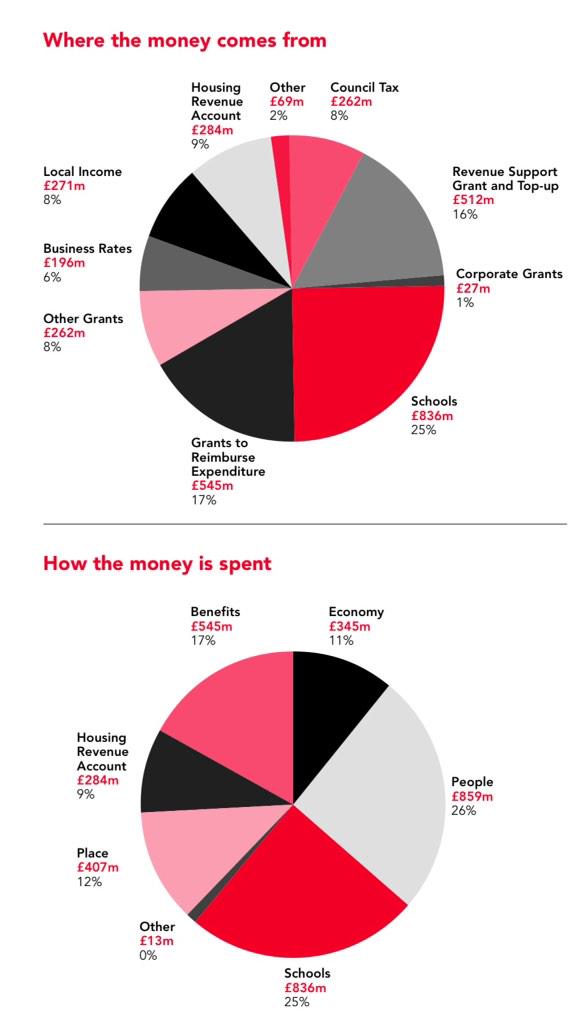
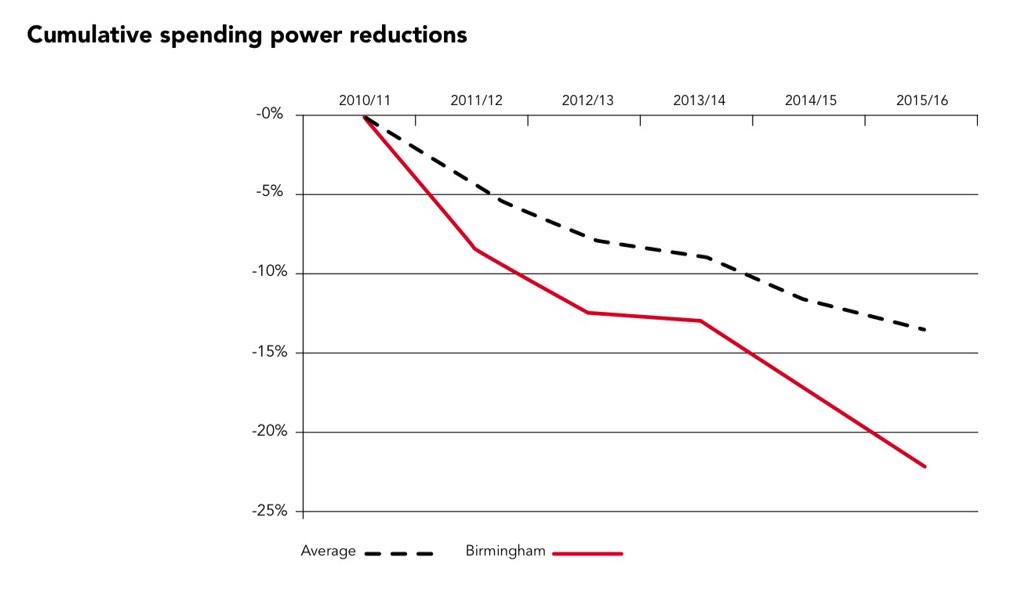 Birmingham City Council is 'consulting the people' again about Birmingham Budget 2015. We get to choose between spending money to maintain a half functioning Library Service, clear up the remnants of the Bin men, or skeleton adult care provision. Parks, youth services, any profitable part the Council, heritage & arts are pretty much out of the picture already.
It's important to visit the survey, although it's increasingly hard to have 'positive ideas about the future of Birmingham City Council'. At first I thought the best thing to do would be to campaign to raise council tax, but as @politicalhackuk helpfully makes clear with graph after graph, no amount of increased council tax, or other income can really deal with the root cause of our problems.
That's why I propose everyone working should send a pound a week (or whatever you can spare) directly to George Osborne to redistribute to his friends, colleagues and other bankers. If nothing else, it will reduce the bureaucracy and hedging necessary for party funds normally raised from bankers and other investment specialists.
It works in America so why not here? I've done the maths. The Daily Mail suggests there is a record 30 million in work. If we all contribute £1 a week, that's nearly half the wealth of the cabinet in a week! A pound a week would be £1.5 billion a year, which while this wouldn't make a huge dent in the debt of £(insert any figure you like, depending on what your trying to prove) billions we owe (it could, however, pay for a knighthood - at present cost, it could collectively buy four Houses of Lords).
Newspapers highlight Russel Brand's bullying tactics when discussing bankers. Is Russel Brand blaming poor bankers for the financial difficulties leading to the poverty we (and bankers all in it together) face in the investment sector?
If we aren't prepared to pay our bankers, how long will it be before bankers are taking handouts at food banks (and sell it on for huge profits)?
Birmingham City Council is 'consulting the people' again about Birmingham Budget 2015. We get to choose between spending money to maintain a half functioning Library Service, clear up the remnants of the Bin men, or skeleton adult care provision. Parks, youth services, any profitable part the Council, heritage & arts are pretty much out of the picture already.It's important to visit the survey, although it's increasingly hard to have 'positive ideas about the future of Birmingham City Council'. At first I thought the best thing to do would be to campaign to raise council tax, but as @politicalhackuk helpfully makes clear with graph after graph, no amount of increased council tax, or other income can really deal with the root cause of our problems.
That's why I propose everyone working should send a pound a week (or whatever you can spare) directly to George Osborne to redistribute to his friends, colleagues and other bankers. If nothing else, it will reduce the bureaucracy and hedging necessary for party funds normally raised from bankers and other investment specialists.
It works in America so why not here? I've done the maths. The Daily Mail suggests there is a record 30 million in work. If we all contribute £1 a week, that's nearly half the wealth of the cabinet in a week! A pound a week would be £1.5 billion a year, which while this wouldn't make a huge dent in the debt of £(insert any figure you like, depending on what your trying to prove) billions we owe (it could, however, pay for a knighthood - at present cost, it could collectively buy four Houses of Lords).
Newspapers highlight Russel Brand's bullying tactics when discussing bankers. Is Russel Brand blaming poor bankers for the financial difficulties leading to the poverty we (and bankers all in it together) face in the investment sector?
If we aren't prepared to pay our bankers, how long will it be before bankers are taking handouts at food banks (and sell it on for huge profits)?
Monday, 10 November 2014
Are we marginalising Green?
I presented at a workshop 'History and Climate Change' this weekend on 'Archivism, activism and Climate change' - more about the conference here, and collation of tweets, info here. My presentation, which was on the lines of 'children and climate change' was placed at the very end, which was good, discussed along with presentations on 'feminist & queer histories and climate change', 'Disabled people and climate change'.
The discussion I found particularly interesting, although perhaps a little concerning. The debate appears to have somewhat moved on from, 'is there climate change?' to 'how do we cope with changed climate'; my concerns were the 'difference' or more accurately 'differentiating' between the various factions within the broader Green movement, which weakens resolve to action.
I understand that 'alternative' communities, and people on the edges of society are often responsible for progressive thinking which leads to radical change. But is there a danger that an ethical, progressive 'alternative' label is lionised, while the 'omnivorous consumer' mainstream is pilloried as unethical and selfish? In a world of multiple identities, is it not possible to think 'Green' and still hold other identities, 'alternative' or not?
Looking back (as was at the workshop) to the Suffragette and Suffragist movements, it is hard to tell which approach was more effective, but change only happened when the principle of suffrage was accepted by 'the mainstream'. Suffrage ceased to be an 'alternative' view of radicals, and became part of a shared ethics and world view. Similar comparisons can be made with the battle to outlaw slavery, whic you could argue worked directly against the metaphorical 'omnivorous consumers' of the time.
I'm sure there are many other historical comparisons to make, which reiterate that it is neither helpful or accurate to consider the 'omnivorous consumer' as less ethical or progressive. Indeed change can only happen when we, a collection of progressives, conservatives (small c), omnivorous or otherwise, work together.
It is only when a significant number of people, rather than clinging to their own 'selfish' agenda, work together, recognise and meet shared ambitions. Then change, to meet our changed climate, can really be made.
Monday, 19 May 2014
The Great War, football and Birmingham

On Christmas day 1914, German soldiers of the 134th Saxon Regiment met with men of the Royal Warwickshire Regiment in no man’s land, for a game of football.
A momumental event in football history - where two armies put down their guns to pop over for a quick game. But the story of football during the war runs far deeper than this brief moment of humanity.

The Football Association chose not to cancel matches through 1914 and 1915, as had Cricket and other sports, and while clearly popular with the men of German and British Forces, it was also popular with the Munition workers - the lady 'Munitionettes', particularly in the North of England. I've had a quick dig around, and could only find this cutting for a game in Birmingham (St. Andrews) between two of the more well known teams from St. Helens and Stoke.
Football was already seen a means of keeping fit and raising morale. While Lady's football was a little frowned upon (note demise of the English Ladies' Football Association after Great War) football as a whole was encouraged.
 Troops had time to spend playing football on the front - Presumably football was also played in and around the hospitals of Birmingham?
The 1st Southern General Hospital in Birmingham, based mainly in Selly Oak, was one of the many hospitals and convalescence care services based in and around Birmimgham - during the war over 130,000 military casualties were treated in Birmingham Hospitals. A brutal reminder of those who did not recover remains in Lodge Hill Cemetery.
 As a playday coordinator, I'm also interested in football on the streets too, played mainly by children in Birmingham. What record is there of these games? This year playday falls on 6th August - two days after the centenary commemorations for the beginning of the first world war - at Swan Corner we will be inviting inclusive teams of mixed gender, age, ability, to take part in what will be the start of Playing out street closures across Birmingham.
Please send me any information or links about football, Birmingham and the Great War - or contact me if you can join us for a quick game on National Playday.
Useful Links:
Football was already seen a means of keeping fit and raising morale. While Lady's football was a little frowned upon (note demise of the English Ladies' Football Association after Great War) football as a whole was encouraged.
Troops had time to spend playing football on the front - Presumably football was also played in and around the hospitals of Birmingham? The 1st Southern General Hospital in Birmingham, based mainly in Selly Oak, was one of the many hospitals and convalescence care services based in and around Birmimgham - during the war over 130,000 military casualties were treated in Birmingham Hospitals. A brutal reminder of those who did not recover remains in Lodge Hill Cemetery.
As a playday coordinator, I'm also interested in football on the streets too, played mainly by children in Birmingham. What record is there of these games? This year playday falls on 6th August - two days after the centenary commemorations for the beginning of the first world war - at Swan Corner we will be inviting inclusive teams of mixed gender, age, ability, to take part in what will be the start of Playing out street closures across Birmingham.Please send me any information or links about football, Birmingham and the Great War - or contact me if you can join us for a quick game on National Playday.
Useful Links:
- http://www.playday.org.uk/
- http://www.1914.org/podcasts/podcast-9-the-christmas-truce/
- http://www.iwm.org.uk/history/football-during-the-first-world-war#
- http://www.1914-1918.net/southerngen.htm
- http://www.independent.co.uk/sport/football/the-wartime-women-footballers-remembering-the-days-when-50000-fans-would-turn-out-to-watch-9150028.html
- http://birminghamlives.blogspot.co.uk/2012/06/equality-in-football-at-olympics.html
- http://www.bbc.co.uk/news/uk-england-coventry-warwickshire-23603417
- http://www.centenarynews.com/article?id=1516
- http://thehistoryofwomensfootball.com/early-1900s.html
- http://peoplesbookshop.co.uk/product/336
Thursday, 3 October 2013
Where is our Childcare?

Funding decision set to force parents out of work and onto benefits. See below, blog written by Amanda Bradley:
There are well over 200 after school clubs in Birmingham catering for working families, if they do not have disabled children. We are asking Birmingham City Council to ensure that European funding made available to support access to employment and inclusion, fills the gap in specialist childcare. If the city council invest in specialist childcare provision to remove barriers to OUR employment they will save TEN times their investment in reduced benefits.
There are well over 200 after school clubs in Birmingham catering for working families, if they do not have disabled children. We are asking Birmingham City Council to ensure that European funding made available to support access to employment and inclusion, fills the gap in specialist childcare. If the city council invest in specialist childcare provision to remove barriers to OUR employment they will save TEN times their investment in reduced benefits.
Please sign our petition and join us in Kings Heath on Saturday 5th October 12.30 pm to 2 pm outside the new Baptist Church opposite ASDA 80 High St Kings Heath Birmingham, B14 7JZ - Please see event on facebook
Children's area and free refreshments available
Parks for Play is a charity that has set up the 1st & ONLY specialist childcare provision in this city. The provision called Playwell, because it delivers play very well, runs from Uffculme school in Moseley. It offers high quality childcare to families with disabled children that need to work, study or commit time to siblings . Families pay standard childcare fees which do not cover running costs because we need higher numbers of staff to cater for our children. Parks for Play works to raise the shortfall, keeping fees affordable & equitable by continuously applying for grants.
This year our expected funding has been frozen for 6 months. This will result in 20 families not being able to stay in their jobs & a 2nd specialist provision in Handsworth not opening. We are waiting for FLEXIBLE SUPPORT FUND which Job Centre Plus district managers can use flexibly to best meet the needs of the local population. One in four families in this city has a child with an additional need. 2013 CAF Holiday Childcare Survey says 79% of families with disabled children not in work cited insufficiently specialist childcare as the barrier.
We ARE the local population and we would like to work, to study and have childcare when we need it.
Blog by Amanda Bradley Parks for Play chair
Please sign our petition on
Parks for Play
2 Vicarage Road
Kings Heath B14 7RA
Tuesday, 6 August 2013
Playday 2013
It's the eve of my birthday, and National Playday! I've been with the kids today making a film and tomorrow we'll be visiting all three of the streets closed to cars in Kings Heath, open to Play. Here 's the short film we made:
http://www.youtube.com/watch?v=GjdEbRAQ9Qk&feature=youtu.be
http://www.youtube.com/watch?v=GjdEbRAQ9Qk&feature=youtu.be
Useful links:
Sunday, 16 June 2013
Getting the archive buzz
 |
| Meeting the dinosaur after the performance |
There are archives, and then there's what you do with them. For 'Life's Rich Pageant' Birmingham History Theatre Company devised a play about the making of Birmingham Pageant of 1938.
When we first got involved, I thought my children would be doing some singing, and I'd be helping them a bit. In the end, we all did some acting, we made props (including this rather handsome, smoke belching dinosaur) and the quality of the songs we all sang devised by Pete Churchill were outstanding. I may not have known much about the Pageant before, but now, me and my family will never forget.

For the past 18 months I've been working to develop Paganel Archives - the first ARCHON registered UK repository archive in a state run primary school. Today I've been replying to emails sent from previous pupils from when the school was first opened, to arrange interviews led by children.
Paganel School are spending a whole week off curriculum to interview more local residents and pupils, and then to represent them creatively. We want all children in the school to have experienced interviewing, and then creating their own Paganel stories inspired by the interviews to showcase on the Friday, alongside more archive materials. Birmingham Archives and Heritage outreach team has been training Yr 5 to support younger children to conduct interviews. We have some really fantastic creative practitioners to work with each class during the week to help students represent the stories the way they want to - Bobbie Gardner (with sound/music), Roz Goddard (Poetry), Brian Homer (photography), Tom Jones (drawing), Pyn Stockman (drama), Clare Chapman (creative outdoors), Richard Albutt (digitally).
But again, even though the archive room will be awesome and the archive will inspire creative learning across the whole school, what I'm most looking forward to is the archive inspired conversations, meeting and talking, putting heritage at the heart of our community.
Weoleypedia
But again, even though the archive room will be awesome and the archive will inspire creative learning across the whole school, what I'm most looking forward to is the archive inspired conversations, meeting and talking, putting heritage at the heart of our community.
Useful links:
Weoleypedia
Subscribe to:
Posts (Atom)