Monday, 23 September 2013

Don't give up on Hope

The procession down Kings Heath High Street for Hope Fennell was bigger this year, with around 400 cyclists and pedestrians taking to the street.

We were there with all our children, who all understood why.  For Jago it reminded him of when he was hit by a bus (minor injuries only), and said he felt people were doing it for all children.  Arthur couldn't understand why nothing had changed.  Freya is just coming to terms with what 'dead' means.

Nazan Fennell, mother of Hope, led the procession.  When we stopped for a few minutes at the crossing Hope died at, she managed to negotiate with the Police officer attempting to clear the road, even after he described it as a 'publicity stunt'.  Hope's friends from school gathered by the ghost bike, while we all waited a short while.  My children were getting a bit impatient, but no one was prepared to move until Nazan said so.  I'm not sure how long we were there for, obstructing the traffic.  As we stood there, I think the police expected the crowds to slowly melt away, but there was a sense of solidarity holding us together, mixed with frustration.

Find out more about Hope Fennell and the Livein Hope campaign or contact khresforum@gmail.com - also see http://hallgreenarts.blogspot.co.uk/p/car-culture.html


Other useful links:


Monday, 16 September 2013

Keeping Playwell

Playwell is under threat.  Laura Watts writes:

An afterschool playcare scheme for children with disabilities is under threat of closure, putting more than 50 families under strain and potentially back on benefits.  Playwell specialist play care enables parents of disabled children to go out to work. It is the only club of its kind in more than 250 afterschool providers in Birmingham.

Funding cuts mean the scheme faces the axe, a prospect that will leave many families struggling to cope, and additional Saturday provision under threat.  The cost to the government in terms of families returning to benefits is estimated to be £480,000, not including emergency respite care.

Playwell was set up by Parks for Play, a Kings Heath charity that promotes inclusive community activities for children, in response to demand from local parents with disabled children.  In addition to caring for children, the project has led to the creation of 20 jobs – an achievement that should not be overlooked according to chair of Parks For Play Amanda Bradley:

Many of these parents wanted to work but were failing to find suitable childcare provision.  We believe that it is a right, not a luxury, for families to have equitable access to work, particularly in this economic climate. 
Playwell has enabled twenty parents to gain or maintain employment this year where potential benefit traps loomed.  The eventual hard-won investment in Playwell has saved the council at least ten times their outlay in benefit support and the impact on children and families meets a host of desirable outcomes for parents and child health, wealth and well-being. Now the service is under threat

Parks For Play raises funding to subsidise the true cost of Playwell so that families with disabled children can pay standard childcare fees in line with equalities legislation.

Grants from Birmingham City Council through Early Years and Childcare, Shorts Breaks for Disabled Children and significantly the Employment Access Team, Development & Culture and the Flexible Support Fund from Job Centre Plus ensured that this service emerged and survived.

Playwell runs from Uffculme ASD specialist school in Moseley which has lent critical support to the initiative serving children from a number of local schools. It is hoped that the model will be duplicated at Hamilton specialist school in Handsworth. Tributes to Playwell have poured in on the news that it may have to close:

Parents say:

Without this service I would not have been able stay in work. Playwell has really progressed my sons social interaction and development. 
I can’t thank Playwell enough. They have saved our lives this year. 
Playwell allows me to keep my job going in very difficult circumstances. It has really broadened my son's experiences.

Amanda Bradley added

Disabled children and their families face the poverty of forced unemployment, social exclusion and immense pressures.Playwell also offers families emergency respite for parents dealing with crisis or other ongoing family commitments.
It gives children with additional needs the opportunity to socialise with peers in their community developing in creative ways that can only be facilitated through play.

Tuesday, 6 August 2013

Playday 2013

It's the eve of my birthday, and National Playday!  I've been with the kids today making a film and tomorrow we'll be visiting all three of the streets closed to cars in Kings Heath, open to Play.  Here 's the short film we made:

http://www.youtube.com/watch?v=GjdEbRAQ9Qk&feature=youtu.be


Useful links:


Monday, 22 July 2013

What do you want in your garden?

Space Probe 2 was at Kings Heath Community Centre Garden last Thursday.  We had a picnic and asked people what they would like in their garden.  We used a range of activities, from reviewing maps to find disused spaces in Kings Heath, making scarecrows, drawing what we want, interviews and eating butternut tereme with rice and flapjacks.

This is the second event in a growing number of events looking at space in Kings Heath, coordinated by Kings Heath Centre for Space Exploration.  On 7th August we're looking forward to a series of streets closing to cars and opening to play across Kings Heath for National Playday.  There'll be more space probes later this year, and Sustrans will be starting a very exciting pilot in Kings Heath looking closer at streets and how we could use them better, so loads to look forward to!

Here's five minutes from the interviews and a few photos:


Tuesday, 9 July 2013

Desire Lines

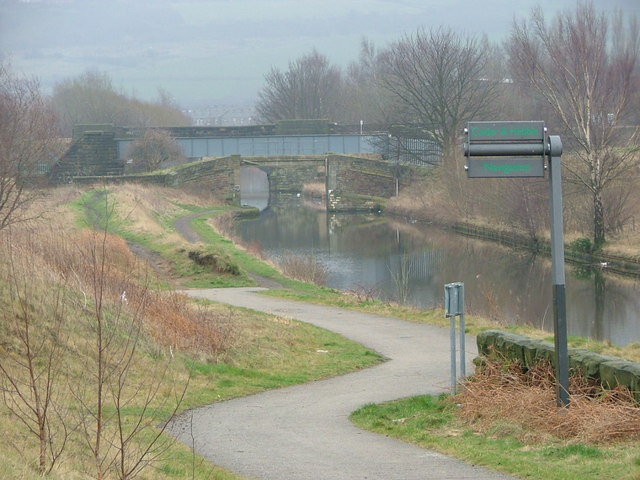
The start of the Spen Valley Greenway & the Calder & Hebble Navigation Canal
The start of the Spen Valley Greenway & the Calder & Hebble Navigation Canal for SE2320
 © Copyright Nigel Homer and licensed for reuse under this Creative Commons Licence
We have been conducting a 'communications audit' in Education Technology Team at University of Birmingham, Med School.  I've also been a part of space exploration in Kings Heath, and last week I went to the first meeting of an exciting Sustrans project to transform Kings Heath -  This is a national programme that will focus on engaging local communities in the redesign of areas around schools & elsewhere with a view to making them safer and more attractive for walking & cycling.  Sustrans presented some fabulous means of engaging local residents in re-designing roads around them in a range of different settings, from rural to city centre.

At first it may not seem so obvious what similarities a 'communications audit' might have with a street re-design, but the first, and most important one is desire lines.  Put simply, design using 'desire line principles' is about following routes that people take, and incorporating it into a plan or design. For a 'communication audit', it's about finding out how people, individuals within an organisation and outside it, communicate, and designing a 'communications strategy' around those desires.

The temptation with street/path designs and communication strategies is to look for the most efficient, quickest routes.  Where this falls apart is failure to consider the people using them.  It may be that 'people' have found a more efficient route, or that a route has other advantages to people using them.

At Spen Valley Greenway, Richard Harris talks about 'desire lines' to shortening routes, and 'lines of desire', lengthening routes to develop a 'relationship' between the people using the route and the route itself:


"Lines of desire, curve and gently tilted paths rise above...concerned with the way people move through a space.  I hope the relationship is parked and then develops as people continue on their journey - at whatever speed - and that this relationship continues to develop in subsequent journeys and pauses along the way."
His commments echo Gaston Bachelard in 'The Poetics of Space'.

In communications, I think this means looking at the most efficient communications media, the communications that most people use, as well as communications that might inspire people, take ownership of that communal 'space' to reflect and continue to develop in subsequent 'communications'.

For instance, blogging or twitter may be effective communication channels, but as a team we may decide to rely more on storify partly for qualities of efficient communication of the information we want to communicate, but also to recognise the patterns of communications we already use, and to reflect and inspire learning and develop confidence in communicating our ideas in our own space.

Tuesday, 2 July 2013

Paganel Stories

After a truly eventful week, Paganel Archives is officially open.  On Friday 28th June we had a jam packed archive room - a room full of archives, stories, and some of the incredible creative responses children have made over the last week, and throughout the history of the school.


At the beginning of the week we had interviews with 24 local community representatives, including two former Head teachers from Paganel Primary school and many previous Paganel pupils from the very start of the school to the 1980s.  Every child in the school took part in those interviews which were all transcribed and prepared for our team of creative practitioners to work with every class (much thanks to Birmingham Archives and Heritage Outreach Team for support in that).  Meanwhile our Yr5 crack Archivist team have been preparing the catalogue, guidance on archives, and a tour for everyone in the school.

On Friday we combined with 'Parents in Paganel' to put on a top notch exhibition of our archives, archives inspired work and the Paganel Archives project, with cream cakes.  We were joined by our MP Gisela Stuart, Chris Upton, Local Historian and Senior Reader at Newmann University said a few words, and four of the children from our archives after-school club cut the ribbon to symbolically open our archives.  The archives themselves were so packed with parents, children and former pupils, it was hard to move.

Here are a few photos, clips and links to some of the stuff from last week:


Also see Paganel Primary School youtube channel for clips of Bobbie Gardner making songs with yr6, yr5 archive tour, yr4 making poetry with Roz Goddard, yr3 drawing a story with Prof Tom Jones,  yr2 photography with Brian Homer, yr1 Drama with Pyn Stockman, Songs and outdoor play with Clare Chapman for Nursery and Reception, all inspired by Paganel Stories from the interviews on Monday & Tuesday!


It is a repository archive so most of the collections are stored in the archive room at Paganel Primary School, which is open to public by appointment on Friday afternoons. However, our catalogue is available online here .
We are also working on a school website and http://weoleypedia.wikispaces.com/. There’s a bit of a backlog of material to put up, but we’re working on it and soon all the interviews, photos, film clips and other written material will be available online. Also try the school youtube for latest updates and some great short clips from ‘Paganel Stories’ week –http://www.youtube.com/user/PaganelSchool.
Paganel now has the first ARCHON registered repository archive in a state primary, and also the first weekly archive after-school club I’ve heard of – seehttp://archiveafterschoolclub.wordpress.com
It’s really impressive to visit, and we are working on making easier to search and navigate through online too.

Sunday, 16 June 2013

Getting the archive buzz

Meeting the dinosaur after the performance
There are archives, and then there's what you do with them.  For 'Life's Rich Pageant' Birmingham History Theatre Company devised a play about the making of Birmingham Pageant of 1938.

When we first got involved, I thought my children would be doing some singing, and I'd be helping them a bit.  In the end, we all did some acting, we made props (including this rather handsome, smoke belching dinosaur) and the quality of the songs we all sang devised by Pete Churchill were outstanding.  I may not have known much about the Pageant before, but now, me and my family will never forget.

What's more important is the archives, the play, the way community drama works, has really been about bringing people together.  In the audience was someone who really had been to the Pageant in 1938, and remember the dinosaurs to be bigger, but every bit as dodgily put together, spouting green smoke.  I met a whole range of people, both actors and audience, all discussing various aspects of Balsall Heath, Birmingham City Council, how things have changed, what's stayed the same, have things got better for women, is there still a sense of community? The archive material has created a 'buzz' from which so much could develop.

For the past 18 months I've been working to develop Paganel Archives - the first ARCHON registered UK repository archive in a state run primary school.  Today I've been replying to emails sent from previous pupils from when the school was first opened, to arrange interviews led by children.

Paganel School are spending a whole week off curriculum to interview more local residents and pupils, and then to represent them creatively.  We want all children in the school to have experienced interviewing, and then creating their own Paganel stories inspired by the interviews to showcase on the Friday, alongside more archive materials.  Birmingham Archives and Heritage outreach team has been training Yr 5 to support younger children to conduct interviews.  We have some really fantastic creative practitioners to work with each class during the week to help students represent the stories the way they want to - Bobbie Gardner (with sound/music), Roz Goddard (Poetry), Brian Homer (photography), Tom Jones (drawing), Pyn Stockman (drama), Clare Chapman (creative outdoors), Richard Albutt (digitally).

But again, even though the archive room will be awesome and the archive will inspire creative learning across the whole school, what I'm most looking forward to is the archive inspired conversations, meeting and talking, putting heritage at the heart of our community.


Useful links:


Weoleypedia