Showing posts with label Archives. Show all posts

Thursday, 11 February 2016

Under the bed

Under my bed
I've been reading about the history of Woodcraft folk from Mary Davis's 'Fashioning a New World'.  It's been a great read and also fascinating from an archivists perspective, as apparently there is next to no 'secondary' material about the movement, and much of the primary sources are dotted all over the country - Mary complains her work would be easier 'if individual members who seem to have stacks of important documents under their beds would [make the material publicly available].

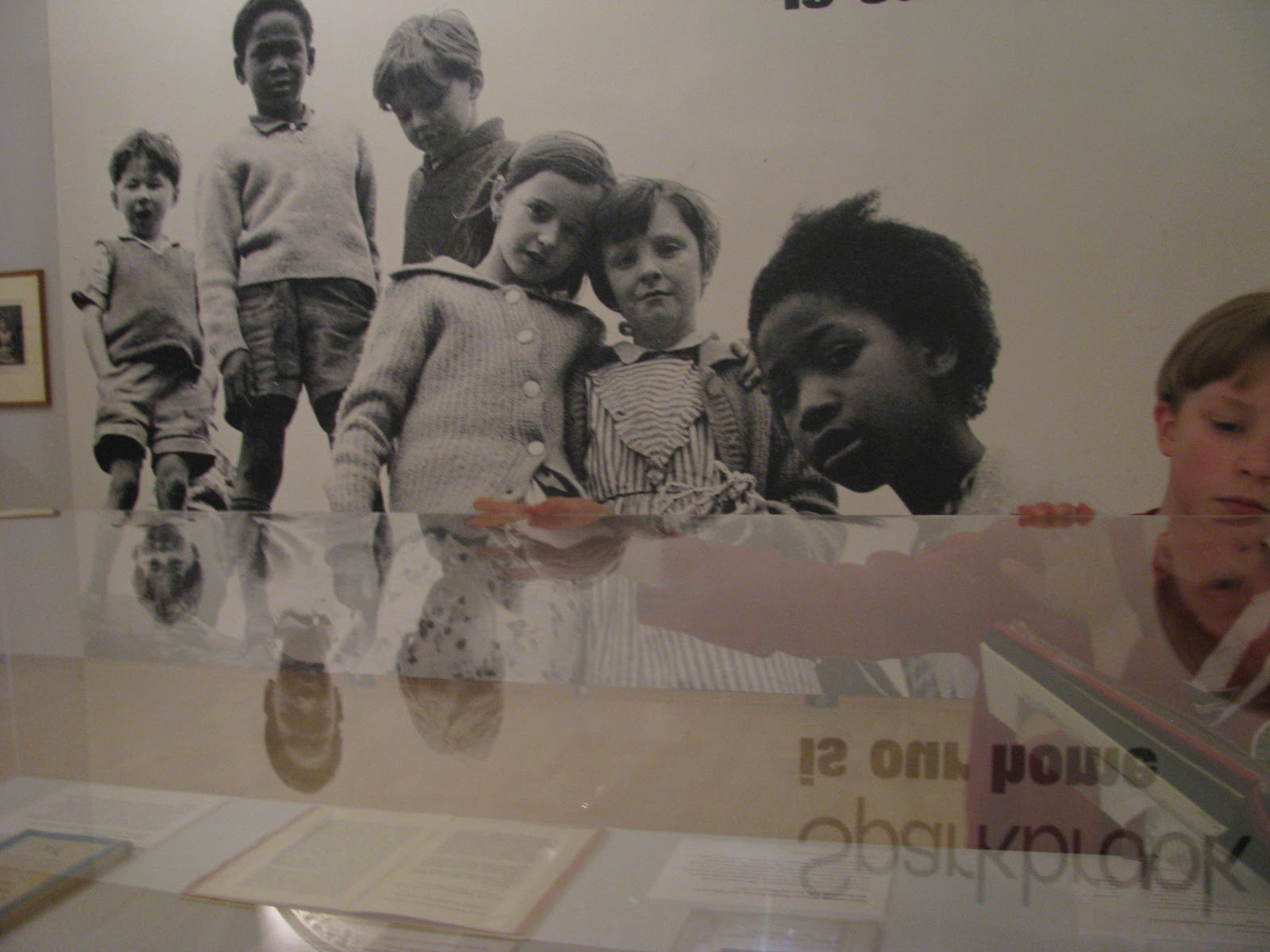
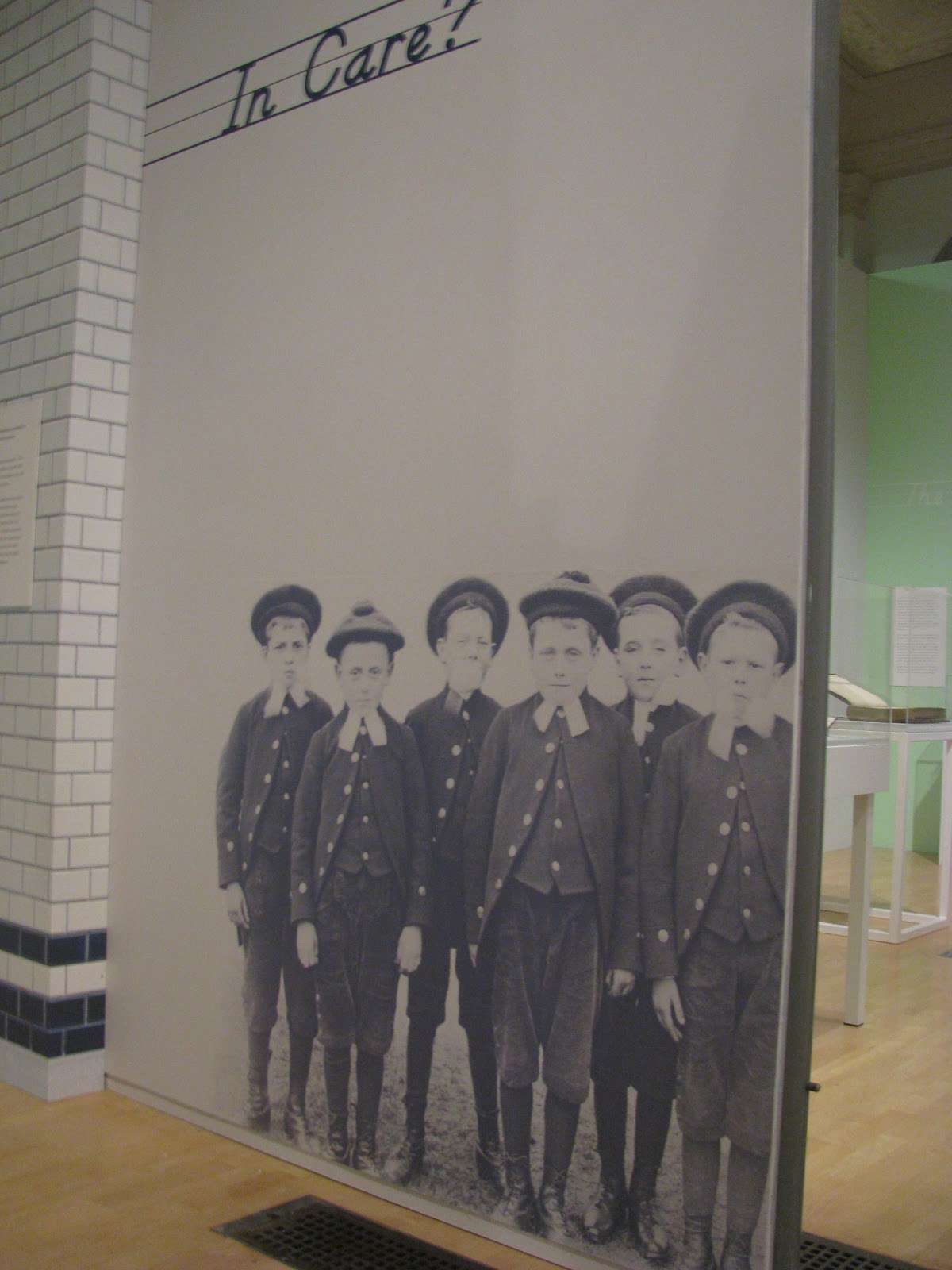
Interesting to consider what there is to 'uncover' under a bed particularly, perhaps, for children.  For children's lives exhibition  it identified the importance of 'under the bed' as one of the few 'private' spaces a child might have.  The 'present day' part of the exhibition worked with young people to re-create a teenagers bedroom, including boxes under the bed.  Birmingham children's hospital provides boxes for 'toys and special things'.

'Toys and special things' are what you might expect to find under a bed, and much can be learned from toys and special things of children, both to find out about them, and as a starting point for stories and other work developing from children presenting a little about themselves. For Paganel Archive project launch event we encouraged children to bring in something for our archive, among other activities.  We carefully managed around 300 items, all with deposit slips completed by the children - to include a description of the item presented in very different ways in each class.  The exhibition was a fascinating insight into the lives of the children, with many toys and special things, and now preserved digitally in our archives.  Each item documented by the owner - a perfect snapshot of the school.

And what's there under my bed I hear you ask?  An old DVD player, a book I'll never finish (Tom Paine, Rights of Man - my red under the bed), a tape of my old band from Uni, and a Ventolin inhaler!

Wednesday, 7 May 2014

Archiving the Arts

As part of Archiving the Arts networking afternoon today at Library of Birmingham I presented on 'Digital Archives: The Hall Green Arts Story'

It was a 14 minute presentation demonstrating digital archiving in action - please see below:


Great to be asked to present on digital archives, to see the other great presentations, and to meet so many archiving arts types, from London and the West Midlands.

To find out more see National Archives, Archiving the Arts

Tuesday, 2 July 2013

Paganel Stories

After a truly eventful week, Paganel Archives is officially open.  On Friday 28th June we had a jam packed archive room - a room full of archives, stories, and some of the incredible creative responses children have made over the last week, and throughout the history of the school.


At the beginning of the week we had interviews with 24 local community representatives, including two former Head teachers from Paganel Primary school and many previous Paganel pupils from the very start of the school to the 1980s.  Every child in the school took part in those interviews which were all transcribed and prepared for our team of creative practitioners to work with every class (much thanks to Birmingham Archives and Heritage Outreach Team for support in that).  Meanwhile our Yr5 crack Archivist team have been preparing the catalogue, guidance on archives, and a tour for everyone in the school.

On Friday we combined with 'Parents in Paganel' to put on a top notch exhibition of our archives, archives inspired work and the Paganel Archives project, with cream cakes.  We were joined by our MP Gisela Stuart, Chris Upton, Local Historian and Senior Reader at Newmann University said a few words, and four of the children from our archives after-school club cut the ribbon to symbolically open our archives.  The archives themselves were so packed with parents, children and former pupils, it was hard to move.

Here are a few photos, clips and links to some of the stuff from last week:


Also see Paganel Primary School youtube channel for clips of Bobbie Gardner making songs with yr6, yr5 archive tour, yr4 making poetry with Roz Goddard, yr3 drawing a story with Prof Tom Jones,  yr2 photography with Brian Homer, yr1 Drama with Pyn Stockman, Songs and outdoor play with Clare Chapman for Nursery and Reception, all inspired by Paganel Stories from the interviews on Monday & Tuesday!


It is a repository archive so most of the collections are stored in the archive room at Paganel Primary School, which is open to public by appointment on Friday afternoons. However, our catalogue is available online here .
We are also working on a school website and http://weoleypedia.wikispaces.com/. There’s a bit of a backlog of material to put up, but we’re working on it and soon all the interviews, photos, film clips and other written material will be available online. Also try the school youtube for latest updates and some great short clips from ‘Paganel Stories’ week –http://www.youtube.com/user/PaganelSchool.
Paganel now has the first ARCHON registered repository archive in a state primary, and also the first weekly archive after-school club I’ve heard of – seehttp://archiveafterschoolclub.wordpress.com
It’s really impressive to visit, and we are working on making easier to search and navigate through online too.

Sunday, 16 June 2013

Getting the archive buzz

Meeting the dinosaur after the performance
There are archives, and then there's what you do with them.  For 'Life's Rich Pageant' Birmingham History Theatre Company devised a play about the making of Birmingham Pageant of 1938.

When we first got involved, I thought my children would be doing some singing, and I'd be helping them a bit.  In the end, we all did some acting, we made props (including this rather handsome, smoke belching dinosaur) and the quality of the songs we all sang devised by Pete Churchill were outstanding.  I may not have known much about the Pageant before, but now, me and my family will never forget.

What's more important is the archives, the play, the way community drama works, has really been about bringing people together.  In the audience was someone who really had been to the Pageant in 1938, and remember the dinosaurs to be bigger, but every bit as dodgily put together, spouting green smoke.  I met a whole range of people, both actors and audience, all discussing various aspects of Balsall Heath, Birmingham City Council, how things have changed, what's stayed the same, have things got better for women, is there still a sense of community? The archive material has created a 'buzz' from which so much could develop.

For the past 18 months I've been working to develop Paganel Archives - the first ARCHON registered UK repository archive in a state run primary school.  Today I've been replying to emails sent from previous pupils from when the school was first opened, to arrange interviews led by children.

Paganel School are spending a whole week off curriculum to interview more local residents and pupils, and then to represent them creatively.  We want all children in the school to have experienced interviewing, and then creating their own Paganel stories inspired by the interviews to showcase on the Friday, alongside more archive materials.  Birmingham Archives and Heritage outreach team has been training Yr 5 to support younger children to conduct interviews.  We have some really fantastic creative practitioners to work with each class during the week to help students represent the stories the way they want to - Bobbie Gardner (with sound/music), Roz Goddard (Poetry), Brian Homer (photography), Tom Jones (drawing), Pyn Stockman (drama), Clare Chapman (creative outdoors), Richard Albutt (digitally).

But again, even though the archive room will be awesome and the archive will inspire creative learning across the whole school, what I'm most looking forward to is the archive inspired conversations, meeting and talking, putting heritage at the heart of our community.


Useful links:


Weoleypedia


Tuesday, 5 February 2013

Make do and Mend

IMAG0467_BURST002_COVER
Paganel Archives room, nearly ready!
Today we held a coffee morning for parents and contributors to 'Make do and mend' - the latest project  at Paganel Primary School - part of Paganel Archives (HLF funded). Since September the 'Paganel Archive Team' has grown to include an archives after-school club, their interviewing, cataloguing, and general archive skills getting more and more impressive as the year goes by.  Added to which we have developed both a fantastic archive room and the archives themselves being constantly added to, catalogued efficiently and, most importantly, used by the children to reflect and learn.

We started September with Birmingham Archives and Heritage training our team to keep archives and to interview in depth.  This was followed by a team from the Rep theatre workshop supporting designing the archive room - they are now putting finishing touches to our archive room.


A window into one of the archive room models made by yr5 


The after-school club followed from the Archive training and has led to a whole series of interviews and cataloguing beyond what we had hoped possible, including parents, teaching staff and other visitors and people connected to the school.  The after school club meets weekly to support the project with cataloguing, oral history recording and other activities.

'Make do and mend' has been a terrific example of how a school archive can be used to value the contribution of parents, the community and children, developing ownership of the school and more engaging relevant learning, encouraging reflection on previous work.

The first workshop we looked at archive material about 'Make do and mend' (a WW2 initiative to make the most of limited resources, involving Recycling, Reusing and Reducing and reviewed some of the 'making do and mending' residents of Sellywood House might be familiar with.  We then visited Sellywood House, a nursing and residential home for older people, where residents talked to children about their experiences of 'Making do and mending'

By the next workshop we had transcripts from interviews prepared and the children worked to relate comments by residents to issues relating to their topic - recycle, reuse, reduce.  The yr5 group categorised the quotes themselves, which led them to settle on a single topic within recycling to create their own collages in small groups (from recycled materials, of course).  They worked in small groups to develop both their ideas and artwork.  Today parents came in to see their presentations of their artwork, and of course, to be interviewed about their experiences of recycling.

The project uses archive material, and will add to the growing Paganel archive - a (now) substantial resource of material including some great (partially transcribed, fully catalogued) interviews of parents, children and local residents, relating to a range of topics within the curriculum, documenting and valuing the lives and stories of our school community.
Categorising comments
Exhibition space at Paganel
Interviewing Olive at Sellywood House
Reviewing recycled materials for artwork
Archive recipe for shampoo and cough medicine
Interviewing Beryl
Explaining rag rugs, hot rocks and corking to teachers
Interviewing parents about recycling today

Children, staff and parents commented:

'It's great to come in and see what the children are doing, and this work has been relevant and got them thinking...When I was growing up I used to make go-karts, like Mr Shufflebottom...now I'm a car mechanic!'

'I've really enjoyed seeing all the work they've done.  The after-school club has been so popular - It's the one thing she doesn't want to miss.'

'We really want to encourage parents to come into our school - this project and the Paganel Archives has been great at encouraging parents in to see what we do here.'

'It was scary doing the presenting [artwork], but I'm glad I did it.  I'm really proud of what I've done.'

Friday, 7 December 2012

Mythical Forest theme for Paganel Archives


It was time to present the ideas for our archive room, and we were not disappointed by the scope of ideas, vision and hard work of our archive team, developing how the archives and the archive room will be used.  Margaret Rees from the Rep has been working with our Archive team for 5 weeks to develop thoughts and ideas, using a range of team design techniques to develop a series of themed model rooms, from Myths and Legends to Underwater (very Lemony Snickett - I'll  have to ask if any have read A Series of Unfortunate events).  We are combining the themes and ideas in a 'Mythical Forest theme', with castles, monsters, soft floor seating, and multimedia tree, among the many great ideas the group came up with.

The term has been very busy and exciting in the Archives room itself, with archives training for the first five weeks with Birmingham Archives team, and the start of a weekly 'Archives Club' - an after-school club additional to all our archives plans, born out of enthusiasm of our Archive team and again supported by Birmingham Archives team, interviewing more and more fabulous people connected with the school and local area.

Next we will visit the Crescent Theatre to see exactly how lighting and props can be used to effect mood and create a truly fantastic atmosphere in our Archive room.  Over christmas some of the work will be carried out in our room, ready for the Easter term, where again our team will help decorate and finish our room.

In January we have plans to explore 'Make do and Mend' as part of a sustainability and recycling theme.  We will be visiting Sellywood House, a local old people's home to interview residents, reviewing archive material alongside interviews and doing our own'making and mending', based on the interviews and material we will find.

It really is very exciting to see real plans for our archive room take shape, and the enthusiasm and dedication of so many people to make a proper repository archive, and most importantly to develop archives representative of Paganel school

Sunday, 15 April 2012

Silo Thinking

We are on holiday in Cornwall admiring East Pool Whim on Mitchell's shaft, working on electric rather than the original steam.  An ex-engineer showing us around assures us the silent, smooth action looks and sounds just as it did, as the huge 52 tonne cast iron 'bob' swings up and down on top of the distinctive Cornish Engine House.

Inside, as we look at the model engine, I look to the silo bins, lined up to deposit the various minerals onto waiting trains, reminding me of the phrase appearing so frequently at the moment - Silo thinking:

 'An information silo is a management system incapable of reciprocal operation with other, related management systems...a pejorative expression that is useful for describing the absence of operational reciprocity'

Silo thinking is a danger in the mechanisation of humans - complex tasks broken down into simple repeatable tasks.  I've only found it in 21st century writing but, as a concept, it is as at home in the 18th, 19th and 20th centuries - Taylorism, industrialisation, and at Boulton's Soho House manufactory taken to a point where there is a breakdown of 'reciprocity' between the various parts. It was recognised by early advocates of industrialisation and capitalism, like Adam Smith:

"[If the worker] has no occasion to exert his understanding or to exercise his invention...generally become as stupid and ignorant as it is possible for a human creature to become." (Adam Smith An Inquiry into the Nature and Causes of the Wealth of Nations, thanks David Gauntlett, Making is connecting p.31)

Silo mentality, the silo effect, silo thinking, is now widely recognised and management consultants employed to address and train to avoid silo phenomena in a range of industries and services.  The solution is a 'flattening' of an organisation to make it more less 'vertical' and more 'horizontal'. By removing middle management, reducing number of work groups (larger groups) and improving communication and integration across work groups, the danger of 'silo thinking' can be alleviated.

There is a logic in it's application, but its blind application can be dangerous.  In one Northern Engand city, the library service has become effectively merged with benefits support services, leading to better integration, fewer managers and cost savings.  It has also led to staff more used to advising on housing benefit struggling to lead storytelling with under 5s.  The workforce is further demoralised and sceptical of senior management, whose apparent view that all the staff can be used flexibly in any role, de-professionalises everyone and damaging further the relationship between senior management and everyone else.  In this, and many cases, silo analogy and management consultants have worsened existing problems.  They are not addressing the cause, only the symptom, and have become part of the problem.

Silos are for silage, and silo talk applied to human systems is insulting and ultimately stinks.  When a low morale team has it's silos 'restructured', unless the driving force is from within the team, it will increase the fear and protectionism which caused the 'poor reciprocity' in the first place.  The various parts need to share all information, not just promotional material, devolve decision taking as well as consultation, exposing the challenges and problems as well as the successes.  It's about building trust, which can then include external people like consultants as part of the team, not separate from it.  It's about understanding the differences between teams as well as their similarities to make best 'reciprocal' exchange.


Boulton and Watt exchanged ideas, experimented, invited some of the greatest thinkers of their age to their 'Lunar Society, exchanging letters, many of which are still accessible through Birmingham Archives and Heritage.   They really were 'The Friends who made the future' ( See Jenny Uglow), in large part because of the exchange ideas between their friends.

The engine at Mitchell's shaft was designed by local engineer, Richard Trevithick, who was successfully sued for infringement of Boulton and Watt's engine design copyright. He also apparently had a court order to ensure he could not travel within one mile of Boulton's Soho House Manufactory - something possibly to do with his father's involvement in the disappearance of some of Watt's early steam engine drawings (Jenny Uglow, The Lunar Men, 2002, p.256). The man at East Pool assures us of the superiority of Trevethick's engine, but he could not compete with the juggernaut of Boulton, Watt and Co.  Boulton and Watt worked with many Cornish engineers, but certainly did not trust Richard Trevithick (Jnr), despite his obvious talents.  Who knows how much quicker and better the steam engine might have developed if they had?  


Useful links:


Tuesday, 27 March 2012

Paganel Archives Launched

After many months of planning, we were finally able to launch Paganel Archives!  In true Paganel style, despite the Ofsted the week before, we ran workshops for the whole school throughout the day with some fantastic creative practitioners, to present a whole series of collaborative work on the theme of 'Our Faces and Places'.

Brian Homer, photographer involved in the original ‘Handsworth Self-portrait’  photo project, and also involved in the New Library self-portrait project at the moment, worked with Timm Sonnenschein and Phillipe worked tirelessly to support children and parents to photograph themselves.  Emma Ricketts led a game where children with pictures pinned to their backs, by asking questions attempted to draw what they have on their back (without looking at it!)  John Hill-Daniel  (film maker) explored the journey to school (background from previous work with Edgbaston Arts Table).  The children discussed their journey, things they enjoy about it, anything they dislike. They added interview clips and sound effects to the video to build a song.  Pyn Stockman (drama practitioner) used the audio pieces and photos from previous Local Heroes project, as a stimulus for further drama based work.  The groups create an action rhyme or spoken word poem.  Bobbie Gardner worked with young people to choose and cut up their favourite sound bytes and use loops to further enhance them creating soundscapes using music tech/puter to do this.Richard Albutt worked with photos taken around the school and maps to create a collaborative map of the school. Mrs Butler prepared a quiz about our local heroes, and Mr Philp also organised writing of blogs on the day - see http://www.paganelschool.com on 20th March for some great blogs from the children about the day.


I spent the day using OHP projectors, dinosaurs lurking in corners around the school, to make head and shoulder lines around everyone's silhouettes directly onto the main hall wall.  By the end of the school day we had everyone's silhouette on a giant school portrait across the main hall wall. The exhibition ran well, the main hall packed with visitors and parents. Every child had brought in an item to contribute to our archive, and created an impressive snap shot of our school to start our Archive. 

It felt like we packed a lot into one day, and hard to keep track of all that was happening. There's still a fair bit to archive from the day, a lot of learning for children and adults, but already feels like we are starting something exciting, important and unique - celebrating and documenting the lives of people in Paganel through the eyes of our children. In photos:


Thursday, 22 March 2012

Childrens Lives Exhibition sneak preview

I was lucky to be invited to the launch of children's lives exhibition.  It was great to meet some of the young people who had been involved in the project seeing for the first time the finished exhibition.  It was fantastic to see their reaction as their ideas, concepts, material had been fashioned by the designers to form a significant portion of a major exhibition with their parents and other lucky guests.

It fitted perfectly with the rest of the archive material documenting children's lives.  Here are a few photos I took with Arthur:


Useful Links:


Friday, 24 February 2012

Showing off School Archives

Last week Greg James from Radio 1 asked his listeners to try out 'stop showing off' -  'the ultimate put down'.  Many listeners responded with stories of how people responded to Mum's favourite phrase to keep Greg in his place.  I don't remember my Mum saying this, but as I was planning a workshop, based on Katy Aquaye-Tonge's suitcase workshop, it made me worry I was just 'showing off'.

When I met James Irwin, I thought was Buzz Aldrin

The purpose of my workshop is to explore what an archive is, and what exactly belongs in a school community archive.  I've collected a few things of my own and will ask the children what they think.  All of these things are personal and I think say a lot about the childhood I had, although I will be interested to see how the children respond.

As I was selecting items, I did try to select items relevant to children now - some memorabilia from the Queen's silver Jubilee, a signed photo of Irwin on the moon, a couple of my action men, alongside other items which may be a little alien or exotic to them - letters to my Dad, a signed picture of Cathy Secker, or a camera script for Songs of Praise.  As I selected items, I wondered if what I was planning was right.  If I was showing them about my childhood, was I just 'showing off''?

Maybe, but if that's how I feel, imagine how it feels to be 9, 10 11 years old, talking about yourself?  Maybe for Greg this 'put down' stung so much because he felt what he had to say was unimportant and that his opinions mattered less than adults.

I don't want to present my mini archive as 'the definitive' school archive collection, but I don't want to be embarrassed to show people what I thought and did as a child.  I want to encourage children to start showing off.


To end with a quote used by Nelson Mandela, from Maryanne Williamson:

Who are you to not let your light shine?...when we let our own light shine, we unconsciously give other people permission to do the same. As we are liberated from our own fear, our presence automatically liberates others

Here's some of my stuff:

Old boys badge

A letter to my Dad detailing shoe inspection

Selection of school photos, including boys shining shoes


School photos from Queen's silver jubilee
Coins from Silver Jubilee and Charles and Di's wedding

My Action men

Mum coming last in egg and spoon race, again (but not dropping egg once).

The wonderful Cathy Secker

My school uniform


Useful Links: