Showing posts with label Podnosh. Show all posts

Saturday, 21 March 2015

Research your Street

crashmap.co.uk documenting Jago's accident
In 2012 my six year old son was seriously injured in a road accident outside my house - he fell into the road from the narrow pavement.  He's fine now, but following that accident I became more interested in road accidents locally, and then more interested in how communities can pull together to support each other and address local issues.

Swan Corner Community group was formed and 'road safety' has always been a major concern for the group,  We are campaigning at the moment to include the road in the new BCC 20mph initiative.
 
Length of Brook Lane where Jago fell into the road 


The road has a narrow pavement and is the main route for walking to Swanshurst School, apparently the largest girls school in Europe, at the end of our road.

We have been documenting probems ourself (see our journeys to school, 1 (Arthur's), 2 (Me, Jago and Freya), & 3(from 2013)) but data freely available online has really made the difference to prove the need for change.  Thanks to Podnosh and their Kings Heath and Moseley social media surgery, we've been able to access all the information we need for this, and pretty much anything else.

For more info on road accidents, and for a range of crimes, well documented, and some useful analysis see the following sites:


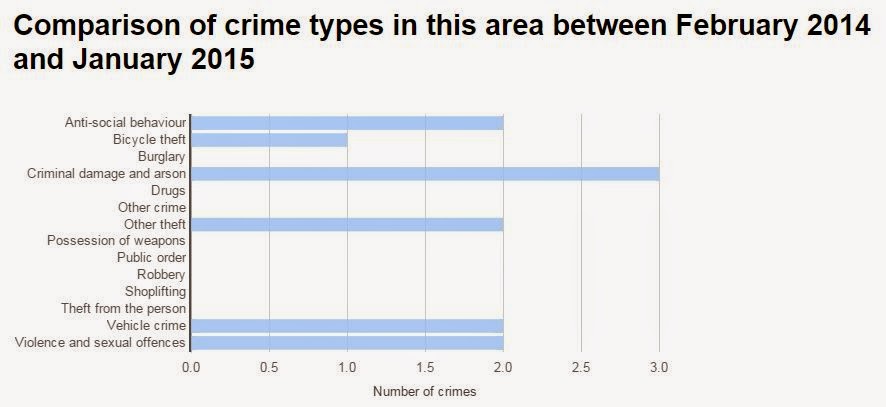
Police.uk has a particularly useful feature - you can draw around the area you are interested in and it will give you a breakdown of useful stats for any time period, so for my small stretch of Brook Lane:


Saturday, 26 May 2012

Encounters

For Near Neighbours evaluation event. 'Stories of Encounters' we asked everyone to look closely into a stranger's eyes.  It was part of a grouping game, initially dividing everyone into three groups of people based on eye colour.  We then made three groups of people based on fashion, music, and the last one done in silence - food.  Basically it was an exploration of prejudice - prejudice we all have, often based on visual clues.  It  brought up some interesting insights into why and how we form groups:


Reflected in comments throughout
Flash mob - Gathering of the Unions, 1832 over 100,000, no mobile in sight
the day, we all form groups based on who we feel comfortable with, and where we feel welcome.

In forming and developing networks (like I've been trying to do for Hall Green Arts Forum), particularly where people identify themselves by their different beliefs, that spirit of welcoming, and of feeling comfortable can make a network - Teachmeet Brum and Social Media Surgeries are excellent recent examples locally of how to run a network to meet up, share ideas and learn from each other:

A TeachMeet is an organised but informal meeting (in the style of an unconference) for teachers to share good practice, practical innovations and personal insights in teaching with technology. (Wikipedia)

Podnosh recently won a 'Big Society Award' from David Cameron for their innovative approach to supporting local community and voluntary sector organisations in using social media using locally based surgeries.

How comfortable you feel or welcome you are is mostly determined by the spirit of the group and of individuals in it, but I'd say it helps if the format can reflect and support that.  Both Teachmeet and Podnosh use digital stuff very effectively, but I think they also make good choices in the format to attract new people and develop the network.  They avoid some of the pitfalls of using traditional meetings and conference format for networking:
  • Agendas give the chair control over what is discussed (and no one else) and there's never enough time for the interesting 'Any Other Business' bit at the end.
  • Presenting from the front - traditional meetings and conferences can actively encourage competitive spirit between people to dominate the limited time the chair (or speaker) allows them.
  • Traditional meeting and conference format reinforce heirarchy - a top down approach to knowledge.
  • The closed door - a meeting behind an anonymous door is never going to attract new people.  Add to that the awkward late arrival, uncomfortable search for a chair, and then you sit on someone's handbag.
It's not to say there is never a place for traditional meetings or conferences, but I think their role in attracting people and developing a network is pretty limited.  Does Seth Godin's analogy about parking meters apply here?  Were meetings and conferences more essential for disseminating information in the past?  I go to conferences and meetings as much to meet people as to listen to the presentations, but meetings and conferences just aren't designed for that, so I make the most of the coffee breaks and lunchtime to catch people I want to talk to.

New technology might be influencing, but is not making change.  Emails, texts, blogs, facebook, youtube are ways to share information quickly, but I don't think the purpose of meetings and conferences has completely changed - it doesn't require new tech for a networking event.  Many conferences include workshops, effective use of postit notes, extended debate, and aspects of Open Space technology, which predates the social media revolution by some 20 years.

I've got to thank Nick Booth and Steve Philp, not just for introducing me to social media, but to opening up the possibility of making meetings better (and to apologise for nicking their ideas).  Look out for Hall Green's Art Surgeries - next one is Picnic in the Park, Friday 22nd June, and 'Artsmeet' sometime soon!


Friday, 2 July 2010

Digitise my life

The other day I was challenged about my 100 hour challenge - Isn't my challenge just doing my job? Which...erm... it is, kind of. Can't get round that really. And another thing - what exactly is my challenge?

Well first of all, what is it I do for my job? I'd like to think as Community Art worker, what I do is value people's lives and support people to express themselves the way they want to.
It's about making connections between different jobs, people, places, home, interests in a meaningful way - its' beginning to sound more and more like connectivism, a theory I knew nothing about until recently, or 'social constructivism', which sounds a lot nicer.

And that's where using digital stuff starts getting exciting (hold back your enthusiasm). Like all good systems, they kind of reflect, or fit, what your view of reality already is. For Community Art Workers, like teachers and other community-minded types, we have a natural affinity for connectivism. The potential for connecting in digital is phenomenal - I am very excited about what Podnosh are doing in our area at the moment in Balsall Heath and other Bham areas exactly because of this.

So, coming back to 100 hour challenge, in roundabout kind of way, it is just doing my job. My 100hrs is about long periods of reflection, longer periods of experimenting with digital stuff out there, and even more networking, real and digital, which should be 'just doing my job'. It's really ring fencing a period of time for me to develop. Something I should be doing anyway, but I guess like lots of people, I end up getting caught up in work. It is an opportunity for me to digitise my life. I have also started to digitise my wife (she now blogs and has started Facebook, after years of resistance!), and looking forward to supporting others to digitise, getting back to community art worker definition, to connect and support people to express themselves the way they want to.

Friday, 18 June 2010

Hyper Reflective


This was my second Ewan Macintosh keynote speach, and again left me thinking. Overall message I took away was get organised, and digital stuff can help you get organised. May not seem like a radical message, and in week when UNISON reveal Birmingham City Council spent £83 million on consultants in same year as 2000 jobs cut, you do sometimes end up thinking we should be working some of these things out ourselves. But hey, sometimes we do need poke in ribs to see obvious, and my work is about consultancy.

So, getting organised, what's stopping me? Well, first of all, I'm not completely disorganised (although my partner might disagree) and I do already spend a large chunk of my life negotiating between all the various parts of life, which mostly works out. However I find organising incredibly dull (partner would agree on this too - that is, organising dull, not me). You can't argue that there are improvements that could be made, but what improvements, and when? Last Ewan presentation, along with help from Podnosh, pushed me well onto the path of utilising wonderful digital tools out there. My calendar is publicly available to view, I facebook, I've dappled second life and other stuff, my thoughts blogged, twitter not happened yet, but approaching inevitable experimentation. I'll have to say most of it has really helped with my organisation.

Digital tools available I use are effective because they reflect my 'real world' uses. You can experiment with bits and bobs, but ultimately the only way it will stick is if it really works for you - witness friends who are facebook dos and don'ts. Why should it all work for everyone?


Organising is the dull bit, but I'll do it if I have to. What I'm interested in developing is reflection. Reflection is easily neglected as we are too busy moving on, but if we develop this, then maybe we will see the reason to improve our organising, or maybe it will be something else. I want to be hyper reflective, not hyper organised. All indications are Ewan is indeed both - even if image of our Ewan Macintosh is surpringly eleventh in Google 'Ewan Macintosh' image popularilty, I'm sure he'll remain in top ten of digital guru pinups.

Wednesday, 19 May 2010

How to do social media


On the way back from Podnosh meeting with my digital mentor, suddenly everything became clear. I understood why Nick had been a little vague when trying to answer my questions, what steps to take, framework, everything. Once in a while you need someone to give you a slap to see the painfully obvious - it took me a while, but I'm there now.

Whatever you do with digital media, it is just that - digital media. The important stuff is the conversations it supports. No conversation, no point to digital media. You have to have something to talk about first - goes without saying, but it is more than that. Laying out a too prescriptive system, too directed, moderated, controlled, censored, and the conversation breaks down. I try and promote 'youth voice' in my work, and there is great potential in using digital social media, but not if you try and lay out how and which people you can and can't talk to. No one likes that.

It's that little bit of Thatcherism that was OK. Not the 'trickle down' baloney, or the every man for himself, but the importance of ownership, the ability to make your own choices, or 'individualism'. That, linked with a genuine desire to share knowledge & experience (I think Thatcher missed this bit) has made some of the most incredible sites - Facebook, Wikipedia, all of them.

It's easy to get blinded by the 'newness' of it, and that everyone else seem to 'get it'. It's also easy to fall into the trap of creating a flash website, setting out everything for you, thinking all is done. Often the answer is right there in front of you - small networks, people linked more naturally and owning their own 'space', collaborating based on each of our own interests, rather than any hierarchical organisational approach.

To 'successfully' use social media it seems you need nothing more than to make any type of conversation. You need to listen, show respect, follow basic etiquette (means you reply to emails quickly as poss, follow links people give you, keep to arrangements you make, update). It's a big world out there, but on the internet can we really be individual and equal?