Showing posts with label Weoley castle. Show all posts

Tuesday, 26 February 2013

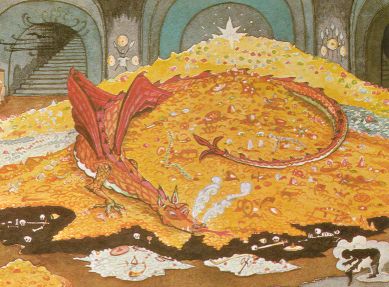
A day with Smaugs at Weoley Castle Library


As part of Arts March and Paganel Archives project, Paganel Primary Year 4 have been at Weoley Castle Library. For more info please see Laura's excellent Northfield Arts Forum blog entry, 2 min audio clip or photo gallery below.  Loads going on for Northfield Arts March and well worth taking some time to check it out.  Weoley Castle activities mainly taking place over this weekend (2nd 3rd March)
Image of Smaug is superfluous, but takes me back to the front cover of 'The Hobbit' I read as a child!


Useful links:


Tuesday, 1 November 2011

Chris Upton's Local Heroes

Thanks again to Dr. Chris Upton, senior lecturer at Newman University College Birmingham, who came to Paganel Primary School to present his local heroes to years 5 and 6.  An inspirational speaker as always, he identified a Victorian writer,  a landowner and builder of Weoley Castle, an industrialist, a writer, a very, very tall lady, and a tree - five of his heroes from our local area.

Please see 17 minute edit of his presentation below:


Paganel Primary School will continue to develop work with all children and parents to identify, and then to document our own local heroes throughout 2012.  The lives of people in our school and community represent the social and cultural changes of our times - We are in a unique position to both document social life and engage children, parents and local community in our rich heritage, across all generations.


Chris Upton comments , 'this community – exceptional in Birmingham – makes it a potentially very rich area for oral history.'  I'll keep posting updates on work at Paganel.


Sunday, 9 October 2011

Search for a hero


Last week has been really exciting as Paganel Primary School decided to take a whole week to explore heroes in every class - Greek, local, vegetable and every other variety.  Everyone loves heroes.  It's a great tool for learning - to think about our heroes and villains, those we know, we imagine, or the ones in all of us.

I was leading two days of workshops on, 'Food heroes and villains'.  First thoughts on 'Food Heroes' was nutritional and healthy food - Initial chat with school suggested children and parents are not necessarily very familiar with fruit and veg (See brown bags vs. mystery meat).  This fitted well with my feelings to try and keep what 'heroes' and 'villains' the children chose (and why) open - partly to see what they already knew, but mainly to see what they thought about fruit and veg.  We choose to only look at fruit and veg, and not muddy the waters with processed or other foods.

Only veg and fruit (no obvious sweets, crisps or other bad boys) meant focus was on veg and fruit, but also on what children thought about the good stuff.  Not surprisingly, the look or the taste seemed more important to children than any health or other considerations.

So what makes a hero, or a villain?

Spiky Cucumber is caught stealing.
 Pumpkin and Sweetcorn save the day.
'Heroes save the world.'

'Heroes always help people.'

'Heroes are kind and think about other people.'

'Villains want to rob and keep it all for themselves.'

'Villains take over the world.   They want to control everything.'

The children understood straight away.   Every child in the school has been encouraged in this week to tell us about their own (personal) hero.  Children as young as four were quite capable to articulate what made a 'hero' and why.  Whether it's a Daddy, an Uncle or a family friend, children understood:

'He is kind because he helps people by taking them to hospital for treatment.'

Pyn Stockman, the creative practitioner working with other classes was making masks of heroes, based largely on the children's personal heroes.  We had vegetables, and not really enough time, staff or proper risk assessment to introduce carving.

So we concentrated on accessorising our vegetables, and creating scenery, lighting, other means of making a story, with the help of our storyboards.  Every child made their own hero or villain, but worked towards developing teamwork - children working together to create their stories.   The stories needed at least one hero and one villain for a story anyway, and this provided a means to make teams and explore why or how a hero does what he or she does.  Teamwork is recognised as important by teaching staff, but:

'We don't often work together like this.  It's not easy to assess individuals.'

The heroes lent a helping hand for the children to reflect:

'Heroes can work together.  Villains aren't very good at it.' (child comment)

The project has been really well supported by all the staff at the school, and both the Head and Deputy visited and talked to the children.  For a moment I worried what response the head teacher would get when he walked into a lively class and ask children, 'Where's the learning?'  Everyone was having fun, but the heroes were working tirelessly on the learning - children were having discussions together about what being a hero is all about, and the challenges of working together to save the world!

Teacher comment:

'Some of them found it quite difficult to work together...[The children said] 'I don't want this to happen, I don't want that to happen'.  They're a very independent bunch that like their own ideas.  They all enjoyed it...it will help teamwork in the class, and tomorrow if they actually put other people's heroes into their [creative writing] stories, that'll be great!'

Child comment:

'It's hard to work together when it is working in a noisy team.  It can be hard.  You need to listen to each other.'

Useful links:

Fruit and veg city


Bad School Lunches uncovered

What is a fair share?

Wednesday, 9 February 2011

Risk Assessing the Internet

Yesterday was the eighth Safer Internet Day.  One of the schools I work in took the opportunity to have an e-safety workshop with everyone in the school (nursery to year six), and also with parents interested.

In any risk assessment, there are two main actions to take - to remove the risk, or if that is not possible, to 'manage' the risk and reduce the possibility and size of the potential hazard.  Schools/ISP providers can and do block sites seen as 'risky'.  However, if you remove all the sites which could be risky, you remove much of any use on the internet (see Kevin's post).  The whole of  'social media' on the internet, could, and often is, seen as too risky for children.  But if we remove access at school, how is that protecting children at home, or preparing them for use of social media?  What about the families and others at home, who likewise may not be aware of risks to them or their children using the internet?

I am particularly impressed with Paganel Primary to grapple this tricky issue and to make a longer term commitment to work with parents and children to safeguard their internet use, through the initial e-safety workshops, but also to continue with digital surgeries for parents and children to support their school community as a whole to make better and safer use of the internet with their children.

Craig's e-safety workshop with nursery children
Craig Gilman's e-safety workshops exposes the extent to which children already take risks on the internet - children as young as 7 or 8 may have facebook accounts across the UK.  Soon it could be the majority of young people with regular access to a computer will have a facebook or other social media network accounts by the time they leave primary school.

If we ignore the problem, and attempt to screen children from social media, the more likely children will not be honest about their use of the internet (Six out of ten children 'lie about age on internet') and more likely people really will be harmed by their internet use


Enhanced by Zemanta

Monday, 24 January 2011

Teachmeet Brum!


Please join TeachMeet Brum!  - THIS IS A FREE EVENT

TeachMeet Brum will be taking place on 14th March at Paganel Primary School, B29 5TG 
Time: 4:30pm - 7:00pm


Learn something new, be amazed, amused and enthused. This is an informal gathering of those curious about teaching and technology. Anyone can share great ideas they've trialled in their classrooms, ask important questions or simply sign up to take part in learning conversations.

Everyone is welcome to join in: teachers from all types of schools, teaching all subjects and age groups. The main part of TeachMeet is hearing stories about learning from teachers.  It is a chance for teachers to hear ideas from each other  and be inspired by colleagues, along with a whole bucket load of networking to boot!

Please contact to anyone working in schools who may be interested in attending.  Any queries contact Steve Philp directly at Paganel Primary School - frogphilp@gmail.com


Public Transport:

Train to Birmingham New Street, then either:
  • Bus (numbers 22, 23 or 29) getting off at Stonehouse Hill; or
  • Local Train to Birmingham University then Number 21 Bus, getting off at Castle Road
Here's a Google Map to add more detail.

Car

  • Junction 3 of M5, then head along the A456 into Birmingham, turn right at the A4123, continue on to the B4121, then right at California Way. Then right onto Stonehouse Hill, following the map. Left onto Swinford Road and right into the main gates.
  • Junction 4 of M5, Junctions 1 or 2 of M42, head for A38 into Birmingham. Turn left at Northfield along the B4121, then right at Barnes Hill along California Way. Then go right onto Stonehouse Hill, following the map. Left onto Swinford Road and right into the main gates.
  • Junction 6 of M6 (Spaghetti Junction), then head into Birmingham on the A38M Aston expressway. Continue through all the tunnels on the A38. Turn right at Selly Oak along the A4040. Turn left along Reservoir Road. Continue along Reservoir Road until it becomes Swinford Road, then turn left into the main gates.

Helicopter

  • Land on the field at 52.44492,-1.969686. Avoid the trees.
  • Land on the playground at 52.444737,-1.968999. Avoid the trees. And the netball posts. 

Friday, 22 October 2010

What's Black History got to do with us?

I've been supporting workshops in a primary school in Birmingham in a community labelled, 'majority white, working class'.  It's a great school I've worked in for a couple of years now, and I was really pleased, following a staff training inset in which the entire teaching staff of the school visited Birmingham Archives, the school set up hour long black history workshops with every class from Nursery to Year 6.

'Black history remains one of those subject areas parents, children and staff can feel uncomfortable with.  We wanted to make sure the workshops were relevant to everyone in the school, and something which addressed the question, 'What's Black History got to do with us?'


So what did we do?  First of all we asked everyone to bring in a family photo beforehand.  Then at workshop we started looking at where everyone came from - walk to other side of room if you don't come from Birmingham, if your parents don't, if your grandparents don't - eventually you start with all on one side, end with most on the other.  Then map pin where your family come from - end up with map covered in pins.  This activity was a favourite with a few children (judging from feedback).  We had three maps - for Birmingham, UK and the world - It may be that some of the pins didn't match exactly where their families came from (there was an interesting one in middle of the Atlantic) but was great to start discusssion.

Then onto Vanley Burke, photographer.  Yes, he's black, and yes he's famous, but unlike Mary Seacole, he's alive, and he's from Birmingham, so a little easier to relate to.  Also much of his (prolific) photography is about documenting the community he lived in (which happened to be Handsworth).  He recorded the black community he was a part of through his photographs, and he has also donated large chunks of his photographic collection to Birmingham Archives & Heritage.


So having looked at the photos, next step, re-enactment of the photos to really start to empathise and get some understanding of the photos - as one yr2  put it - 'you feel like your in the photo'.  Great way to start discussion.


It was pretty hectic, and couldn't cover in too much depth in one hour with 30 children, but from comments looked like we engaged everyone, and made it mean something to them.  All children feedback was positive:


'We could learn about what are the same or similar to Birmingham [to other places]'


'We could do some more what we did today.'


'[We could] lurn about Weoly Casle'


'[We could] visit the libraries in other areas.'

And from the teacher comments:


'Some children commented, 'Why are all the faces black?'  The question was handled very well.'

'We would like to push it more - we need to make sure there is good follow up work.'


We had interesting break time conversations with children about where our families came from, and what questions we wanted to ask them.  All very positive, and from Izzy, workshop leader:


Enhanced by Zemanta

Saturday, 7 August 2010

Weoley Castle - The Bad and the Good

Weoley Castle has a poor reputation.  In Weoley Castle itself a shopkeeper called it 'the Bronx of Birmingham', and yet there is also an amazing pride in the area too.  We have just completed a project (JOIN US) where we worked with young people interviewing a range of Weoley Castle people.

When we asked people about Weoley Castle, nearly all interviewees started with either, 'there's no place better...', or 'it's a shithole...'.  Summing up the good and the bad is a useful way to open up debate about any issue, and we have used that format - two edited films of theWeoley - one good one bad.  All will be online soon  for all to comment or join the debate.

I think it is all too easy to be carried away by 'the bad' in any community.  It is important to address problems, and yes, it may only be a handful of people who give Weoley Castle it's poor reputation, but those people have made a big impact on the lives of people in Weoley Castle, and leave their mark on the square on a weekend evening.

What I think is more easily forgotten is 'the good' in any commmunity, and those 'community activists' and that sense of trust, respect and responsibility between members of a close community like Weoley Castle - The good in a community has a big impact too.

What hasn't changed in Weoley Caslte over the last 80 years of its existence, is what people from outside Weoley see and report on -  vandalism and loutish behaviour.  And what is the most common thing people complain about in Weoley Castle?  Lack of services for people, particularly the bus. And that hasn't changed either.

Images below thanks to Mike Hunkin form Bham Archives and Heritage, 'Suburban Birmingham' project.

Birmingham Gazette, 3rd February 1938
Thursday, 24 June 2010

Day 2

Started brief twitterings. Had a couple of followers I don't know. Don't know why, but if they like it... Blogging is also starting to build and provide good record of work and also starting to refer back to them. Also Shenley one is now at end of project, so effectively dead, or dieing, but that's cool, because it was intended as a work journal and now the project has ended. Now more of an archive.

After a bit of experimentation, Paganel Primary school have started to encourage creative practitioners to keep their reflections on their own blogs, accessible to the school. That will be 5 practitioners, a teacher or two and me, so a real network of reasonable size which should work. I think this model is interesting - it keeps the blogs of Creative practioners belonging to the creative practitioners. I'm also hoping it will aid proper regular reflection for CPs and fabulous record for me, school and CPs to know what is happening and what has happened.

I'm also in touch with Podnosh to start a Digital Surgery in Weoley. I think this is a risky but potentially the most powerful bit of work I will do over next 100 days to network, share and support others. I'm also keen to bridge gap between schools and communities, supported by an open, sharing digital community media. My analysis of present situation is stuff happening in schools, stuff happening in communities. Only contact is for a particular project, normally led strongly by a school or by a community group with little real partnership or review beyond length of a project/visit. Already have good links with Weoley Library, schools in area, and other community groups I've worked with recently, in particular the Shenley Community Centre Groups. People have good reason to start conversations, but it will involve moving out of 'comfort zone' to meet others.

Next to do is experiment with Wordpress and meet with Podnosh. Need to start making more definite arrangements for Surgeries.